Why Tunes Blow Up Engines
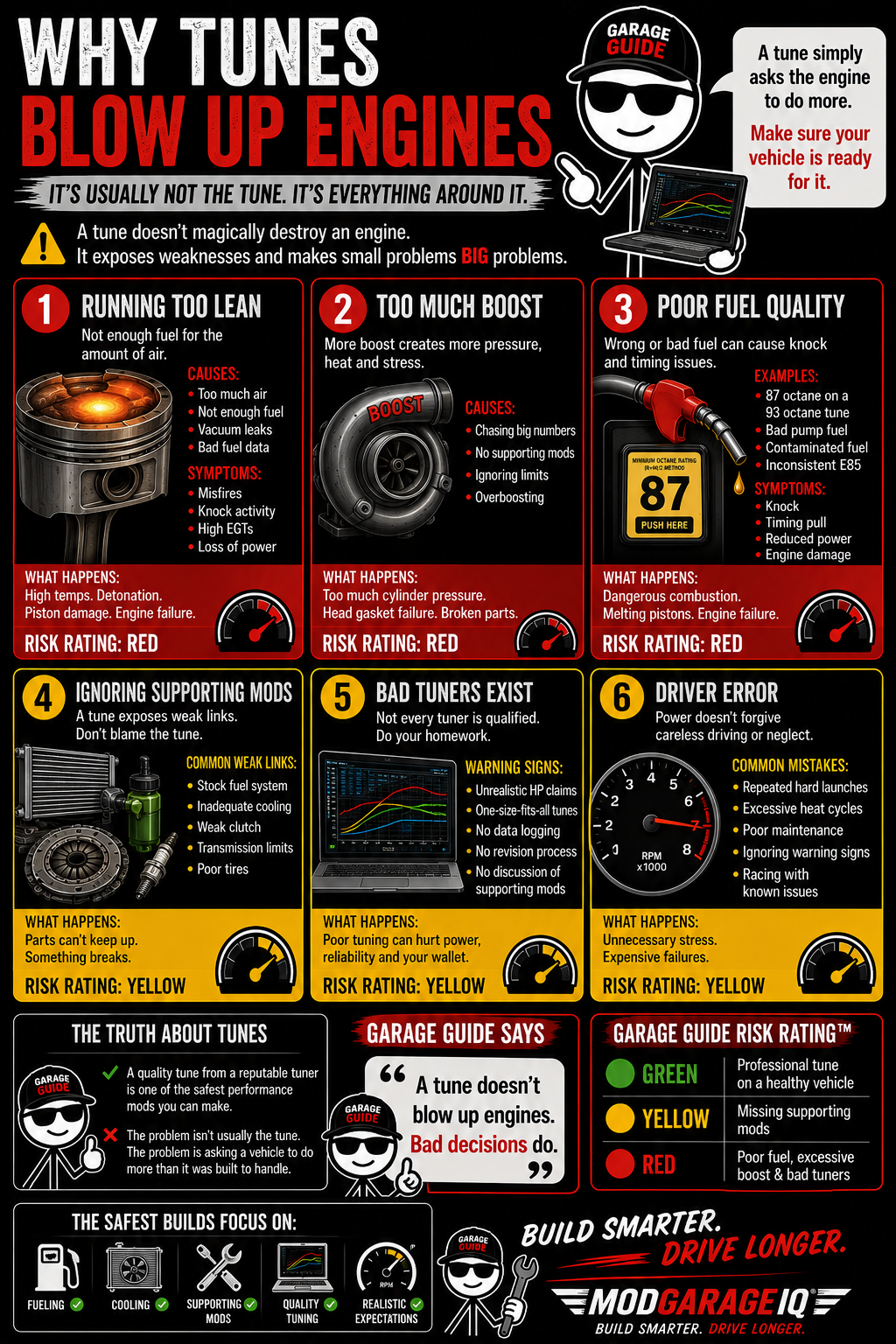
It’s Usually Not The Tune. It’s Everything Around It.
When an engine fails after a tune, the tune often gets blamed.
Sometimes that’s fair.
Most of the time, it’s only part of the story.
A tune doesn’t magically destroy an engine.
A tune simply asks the engine to do more.
The real question is whether the vehicle was prepared for it.
What Does A Tune Actually Do?
Modern engine tunes adjust things like:
• Air/fuel ratio
• Ignition timing
• Boost pressure
• Throttle response
• Torque management
• Transmission behavior
A quality tune can improve drivability, power, and efficiency.
A bad tune can create serious problems.
But even a great tune can’t fix mechanical weaknesses.
Running Too Lean
One of the fastest ways to damage an engine is running lean.
A lean condition means there isn’t enough fuel for the amount of air entering the engine.
This causes:
• Excessive combustion temperatures
• Detonation
• Piston damage
• Ring failure
• Engine failure
Symptoms may include:
• Misfires
• Knock activity
• High exhaust temperatures
• Loss of power
🔴 Garage Guide Risk Rating: RED
This is where many expensive failures begin.
Too Much Boost
Boost is addictive.
Many enthusiasts continue increasing boost pressure without upgrading supporting components.
More boost creates:
• More cylinder pressure
• More heat
• More stress
Factory engines have limits.
Ignoring those limits gets expensive quickly.
🔴 Garage Guide Risk Rating: RED
More boost requires more planning.
Poor Fuel Quality
Many performance tunes are designed around specific fuel.
Using lower-quality fuel than the tune requires can create dangerous conditions.
Examples include:
• Running 87 octane on a 93 tune
• Poor-quality pump fuel
• Contaminated fuel
• Inconsistent E85 content
Symptoms:
• Knock
• Timing pull
• Reduced performance
• Engine damage
🔴 Garage Guide Risk Rating: RED
Never assume fuel quality.
Ignoring Supporting Mods
This is where many builds fail.
The tune gets blamed.
The real problem was the vehicle wasn’t ready.
Common examples:
• Stock fuel system
• Inadequate cooling
• Weak clutch
• Transmission limitations
• Poor tires
The tune simply exposed existing weaknesses.
🟡 Garage Guide Risk Rating: YELLOW
Build the foundation first.
Bad Tuners Exist
Let’s be honest.
Not every tuner is qualified.
Some prioritize big dyno numbers over long-term reliability.
Warning signs include:
• Unrealistic horsepower claims
• Generic “one-size-fits-all” tunes
• No data logging
• No revision process
• No discussion of supporting modifications
🔴 Garage Guide Risk Rating: RED
Research before you buy.
Driver Error
This one doesn’t get discussed enough.
Many failures happen because owners immediately abuse the vehicle after modifications.
Examples:
• Repeated hard launches
• Excessive heat cycles
• Poor maintenance
• Ignoring warning signs
• Racing with known issues
Horsepower doesn’t forgive neglect.
🟡 Garage Guide Risk Rating: YELLOW
The Truth About Tunes
A quality tune from a reputable tuner is often one of the safest performance modifications available.
The problem isn’t usually tuning.
The problem is asking a vehicle to do more than it was built to handle.
Garage Guide Says
“A tune doesn’t blow up engines. Bad decisions do.”
Garage Guide Risk Rating™
🟢 Professional Tune On A Healthy Vehicle
🟡 Missing Supporting Mods
🔴 Poor Fuel, Excessive Boost & Bad Tuners
Bottom Line
Most engine failures blamed on tuning are actually caused by poor planning.
The safest builds focus on:
✅ Fueling
✅ Cooling
✅ Supporting modifications
✅ Quality tuning
✅ Realistic expectations
Because horsepower is easy to buy.
Reliability is earned.
🏁 Build Smarter. Drive Longer.
#ModGarageIQ #GarageGuide #EngineTuning #PerformanceMods #Horsepower #MustangLife #CarMods #AutomotiveTips #BuildSmarterDriveLonger #PerformanceCars