Why Is My Car Overheating?
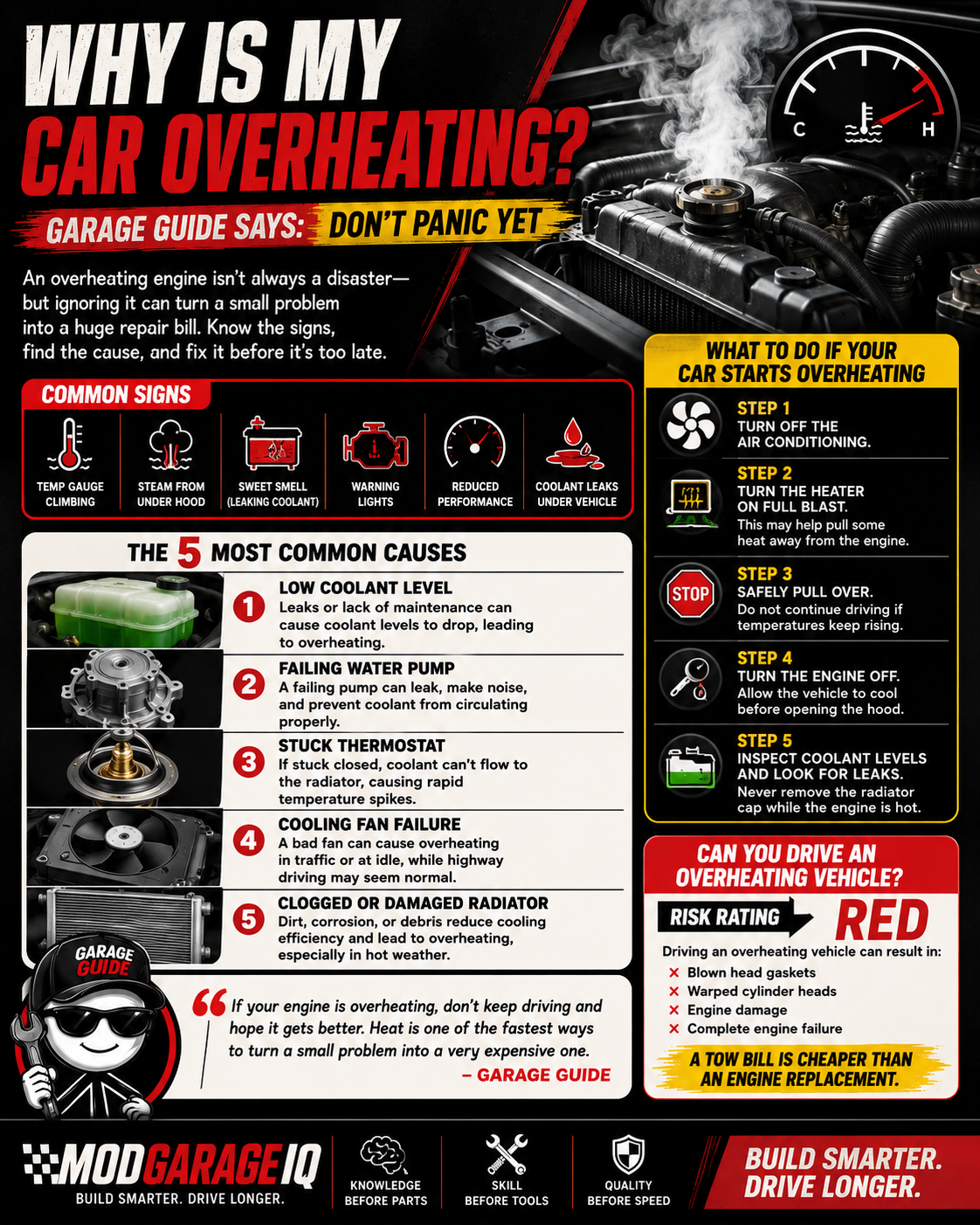
Garage Guide Says: Don’t Panic Yet
Few things get a driver’s attention faster than watching the temperature gauge climb into the red.
An overheating engine isn’t something you should ignore, but it also doesn’t automatically mean your engine is ruined.
The key is understanding what’s causing the problem and taking action before a small repair becomes a major one.
Common Signs Your Vehicle Is Overheating
Watch for these warning signs:
- Temperature gauge climbing higher than normal
- Steam coming from under the hood
- Sweet smell from leaking coolant
- Warning lights on the dashboard
- Reduced engine performance
- Coolant leaking under the vehicle
If you notice any of these symptoms, it’s time to investigate.
The 5 Most Common Causes of Overheating
1. Low Coolant Level
This is the most common cause of overheating.
Your cooling system relies on coolant to transfer heat away from the engine. If coolant levels drop due to a leak or lack of maintenance, engine temperatures can rise quickly.
Check:
- Coolant reservoir
- Radiator
- Hoses
- Water pump area
2. Failing Water Pump
The water pump keeps coolant moving through the engine.
When it begins to fail, coolant circulation slows or stops entirely, causing temperatures to spike.
Common symptoms include:
- Coolant leaks
- Grinding noises
- Engine overheating at idle
- Coolant stains near the water pump
3. Stuck Thermostat
The thermostat regulates coolant flow.
If it becomes stuck closed, coolant cannot circulate through the radiator, causing the engine to overheat rapidly.
Signs include:
- Quick temperature spikes
- Heater blowing cold air
- Overheating shortly after startup
4. Cooling Fan Failure
When you’re driving at highway speeds, airflow helps cool the radiator.
At lower speeds, electric cooling fans perform that job.
A failed cooling fan can cause:
- Overheating in traffic
- Rising temperatures while idling
- Normal temperatures at highway speeds
5. Clogged or Damaged Radiator
Over time, radiators can become clogged with debris, corrosion, or sediment.
This reduces cooling efficiency and can lead to overheating, especially during hot weather or heavy driving conditions.
What To Do If Your Car Starts Overheating
If your temperature gauge enters the red zone:
Step 1
Turn off the air conditioning.
Step 2
Turn the heater on full blast.
This may help pull some heat away from the engine.
Step 3
Safely pull over.
Do not continue driving if temperatures continue rising.
Step 4
Turn the engine off.
Allow the vehicle to cool before opening the hood.
Step 5
Inspect coolant levels and look for obvious leaks.
Never remove the radiator cap while the engine is hot.
Can You Drive An Overheating Vehicle?
Garage Guide Risk Rating™
🔴 RED
Driving an overheating vehicle can result in:
- Blown head gaskets
- Warped cylinder heads
- Engine damage
- Complete engine failure
A tow bill is almost always cheaper than an engine replacement.
Garage Guide Says
“If your engine is overheating, don’t keep driving and hope it gets better.
Heat is one of the fastest ways to turn a small problem into a very expensive one.”
Bottom Line
Overheating is often caused by a cooling system issue such as low coolant, a failing water pump, a stuck thermostat, or a bad cooling fan.
The sooner you diagnose the problem, the less likely you are to face major engine repairs.
Pay attention to warning signs, address cooling system issues quickly, and remember:
🏁 Build Smarter. Drive Longer.
#ModGarageIQ #GarageGuide #BuildSmarterDriveLonger #CarMaintenance #Overheating #MechanicLife #AutomotiveTips