Why Does My Car Pull To One Side?
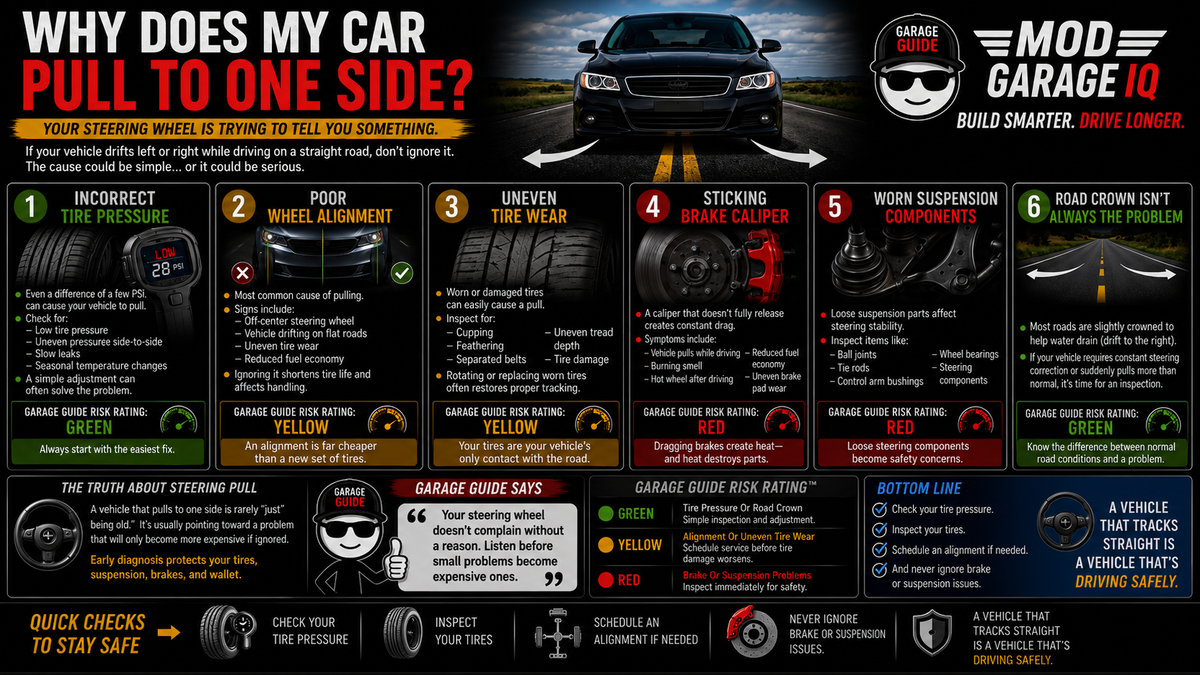
Your Steering Wheel Is Trying To Tell You Something.
If your vehicle drifts left or right while driving on a straight road, don’t ignore it.
Many drivers assume it’s “just an alignment.”
Sometimes it is.
Other times, it could indicate worn suspension components, uneven tire wear, brake issues, or even low tire pressure.
The good news?
Most causes are easy to diagnose if you know what to look for.
Incorrect Tire Pressure
Before assuming the worst, check your tire pressures.
Even a difference of just a few PSI can cause your vehicle to pull to one side.
Look for:
• Low tire pressure
• Uneven pressures side-to-side
• Slow leaks
• Seasonal temperature changes
A simple tire pressure adjustment can often solve the problem.
🟢 Garage Guide Risk Rating: GREEN
Always start with the easiest fix.
Poor Wheel Alignment
Wheel alignment is the most common cause of pulling.
Potholes, curbs, and normal wear can gradually knock the suspension out of specification.
Signs include:
• Off-center steering wheel
• Vehicle drifting on flat roads
• Uneven tire wear
• Reduced fuel economy
Ignoring alignment problems shortens tire life and affects handling.
🟡 Garage Guide Risk Rating: YELLOW
An alignment is far cheaper than a new set of tires.
Uneven Tire Wear
Worn or damaged tires can easily cause a pull.
Inspect for:
• Cupping
• Feathering
• Separated belts
• Uneven tread depth
• Tire damage
Rotating or replacing worn tires often restores proper tracking.
🟡 Garage Guide Risk Rating: YELLOW
Your tires are your vehicle’s only contact with the road.
Sticking Brake Caliper
A brake caliper that doesn’t fully release creates constant drag.
Common symptoms include:
• Vehicle pulls while driving
• Burning smell
• Hot wheel after driving
• Reduced fuel economy
• Uneven brake pad wear
Brake issues should always be addressed immediately.
🔴 Garage Guide Risk Rating: RED
Dragging brakes create heat—and heat destroys parts.
Worn Suspension Components
Loose suspension parts affect steering stability.
Inspect items like:
• Ball joints
• Tie rods
• Control arm bushings
• Wheel bearings
• Steering components
These parts naturally wear over time and should be inspected regularly.
🔴 Garage Guide Risk Rating: RED
Loose steering components become safety concerns.
Road Crown Isn’t Always The Problem
Most roads are slightly crowned to help water drain.
That means many vehicles naturally drift slightly to the right.
However…
If your vehicle requires constant steering correction or suddenly begins pulling more than normal, it’s time for an inspection.
🟢 Garage Guide Risk Rating: GREEN
Know the difference between normal road conditions and a developing problem.
The Truth About Steering Pull
A vehicle that pulls to one side is rarely “just being old.”
It’s usually pointing toward a problem that will only become more expensive if ignored.
Early diagnosis protects your tires, suspension, brakes, and wallet.
Garage Guide Says
“Your steering wheel doesn’t complain without a reason. Listen before small problems become expensive ones.”
Garage Guide Risk Rating™
🟢 Tire Pressure Or Road Crown
Simple inspection and adjustment.
🟡 Alignment Or Uneven Tire Wear
Schedule service before tire damage worsens.
🔴 Brake Or Suspension Problems
Inspect immediately for safety.
Bottom Line
If your car pulls to one side, don’t just fight the steering wheel.
Find the cause.
Most problems start small and become expensive only when they’re ignored.
Check your tire pressure.
Inspect your tires.
Schedule an alignment if needed.
And never ignore brake or suspension issues.
Because a vehicle that tracks straight is a vehicle that’s driving safely.
🏁 Build Smarter. Drive Longer.
#ModGarageIQ #GarageGuide #WheelAlignment #CarMaintenance #Suspension #BrakeRepair #AutomotiveTips #BuildSmarterDriveLonger #CarCare