Why Bigger Wheels Aren’t Always Better
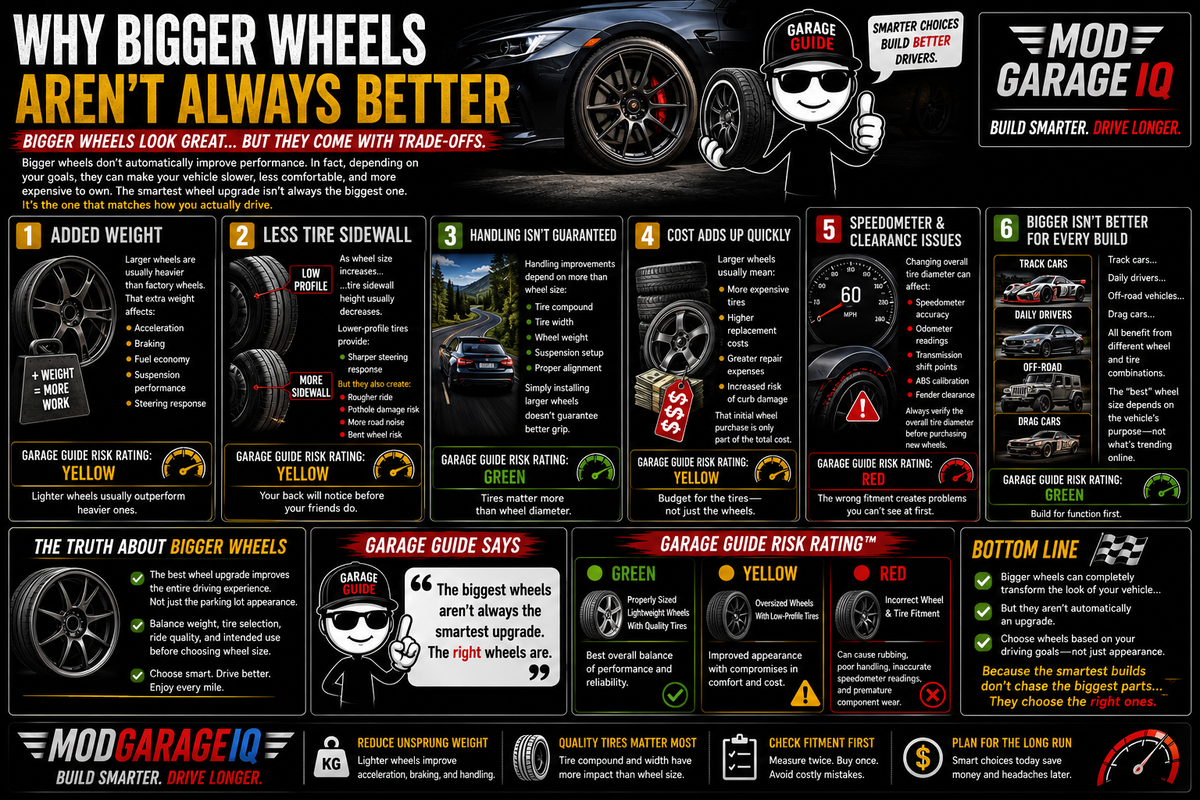
Bigger Wheels Look Great… But They Come With Trade-Offs.
Larger wheels are one of the most popular modifications enthusiasts make.
They can completely change the appearance of a vehicle.
But bigger wheels don’t automatically improve performance.
In fact, depending on your goals, they can actually make your vehicle slower, heavier, less comfortable, and more expensive to own.
The smartest wheel upgrade isn’t always the biggest one.
It’s the one that matches how you actually drive.
Added Weight
Larger wheels are usually heavier than factory wheels.
That extra weight affects:
• Acceleration
• Braking
• Fuel economy
• Suspension performance
• Steering response
Because wheels are rotating mass, every extra pound matters more than weight elsewhere on the vehicle.
🟡 Garage Guide Risk Rating: YELLOW
Lighter wheels usually outperform heavier ones.
Less Tire Sidewall
As wheel size increases…
…tire sidewall height usually decreases.
Lower-profile tires provide:
• Sharper steering response
But they also create:
• Rougher ride quality
• Greater pothole damage risk
• More road noise
• Increased chance of bent wheels
Appearance often comes at the expense of comfort.
🟡 Garage Guide Risk Rating: YELLOW
Your back will notice before your friends do.
Handling Isn’t Guaranteed
Many people assume larger wheels automatically improve handling.
Not necessarily.
True handling improvements depend on:
• Tire compound
• Tire width
• Wheel weight
• Suspension setup
• Proper alignment
Simply installing larger wheels doesn’t guarantee better grip.
🟢 Garage Guide Risk Rating: GREEN
Tires matter more than wheel diameter.
Cost Adds Up Quickly
Larger wheels usually mean:
• More expensive tires
• Higher replacement costs
• Greater repair expenses
• Increased risk of curb damage
That initial wheel purchase is only part of the total cost.
🟡 Garage Guide Risk Rating: YELLOW
Budget for the tires—not just the wheels.
Speedometer & Clearance Issues
Changing overall tire diameter can affect:
• Speedometer accuracy
• Odometer readings
• Transmission shift points
• ABS calibration
• Fender clearance
Always verify the overall tire diameter before purchasing new wheels.
🔴 Garage Guide Risk Rating: RED
The wrong fitment creates problems you can’t see at first.
Bigger Isn’t Better For Every Build
Track cars…
Daily drivers…
Off-road vehicles…
Drag cars…
All benefit from different wheel and tire combinations.
The “best” wheel size depends on the vehicle’s purpose—not what’s trending online.
🟢 Garage Guide Risk Rating: GREEN
Build for function first.
The Truth About Bigger Wheels
The best wheel upgrade improves the entire driving experience.
Not just the parking lot appearance.
Balance weight, tire selection, ride quality, and intended use before choosing wheel size.
Garage Guide Says
“The biggest wheels aren’t always the smartest upgrade. The right wheels are.”
Garage Guide Risk Rating™
🟢 Properly Sized Lightweight Wheels With Quality Tires
Best overall balance of performance and reliability.
🟡 Oversized Wheels With Low-Profile Tires
Improved appearance with compromises in comfort and cost.
🔴 Incorrect Wheel & Tire Fitment
Can cause rubbing, poor handling, inaccurate speedometer readings, and premature component wear.
Bottom Line
Bigger wheels can completely transform the look of your vehicle…
But they aren’t automatically an upgrade.
Choose wheels based on your driving goals—not just appearance.
Because the smartest builds don’t chase the biggest parts…
They choose the right ones.
🏁 Build Smarter. Drive Longer.
#ModGarageIQ #GarageGuide #Wheels #PerformanceTires #WheelFitment #CarMods #AutomotiveTips #BuildSmarterDriveLonger #CarEnthusiast