Wheel Bearing Noise Or Tire Noise?
They Can Sound Similar. They Are Not The Same.
One of the most common misdiagnoses in the automotive world is confusing a bad wheel bearing with noisy tires.
Both create a humming or roaring sound while driving.
Both become louder as speed increases.
But only one can eventually become a serious safety concern.
Knowing the difference can save you hundreds of dollars and prevent replacing perfectly good parts.
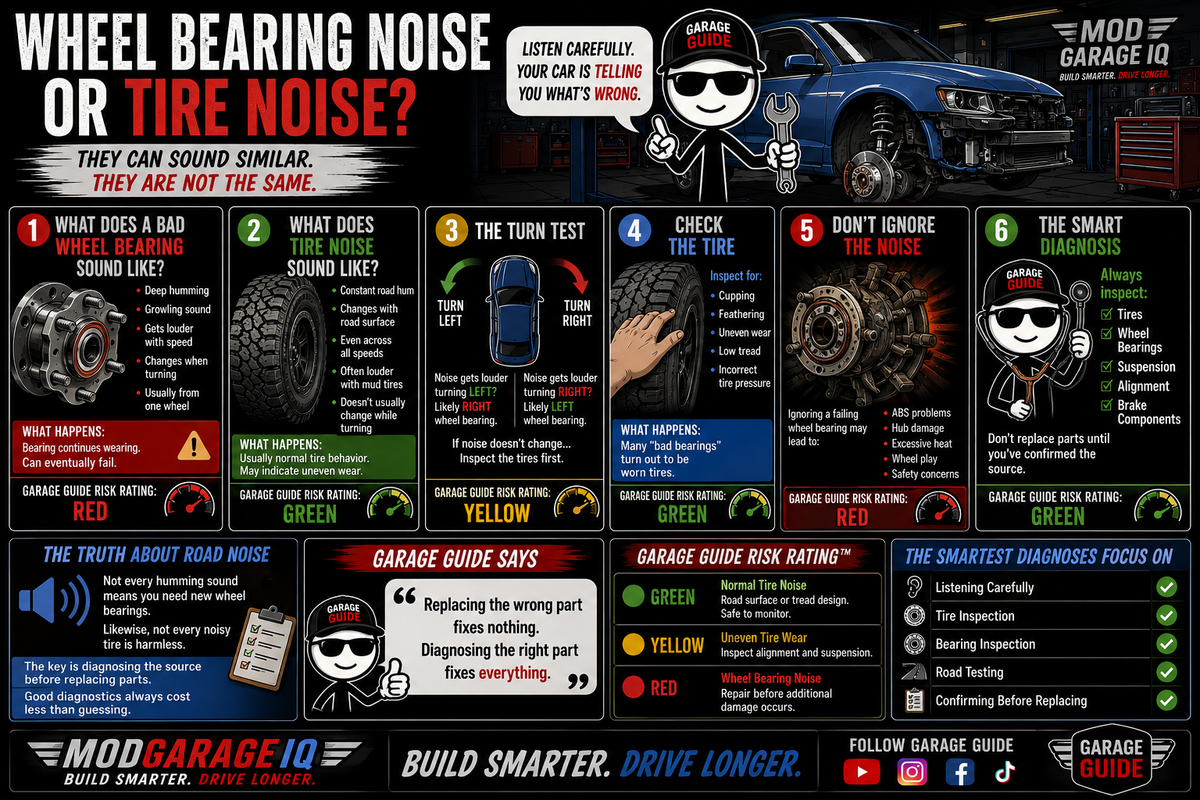
What Does A Bad Wheel Bearing Sound Like?
A failing wheel bearing usually creates a deep humming, growling, or roaring noise.
Unlike tire noise, the sound often changes when the vehicle turns.
Common symptoms include:
• Humming that increases with speed
• Noise that changes while cornering
• Vibration through the steering wheel
• Excessive wheel play
• ABS warning lights (in some cases)
🔴 Garage Guide Risk Rating: RED
Wheel bearings rarely fix themselves.
What Does Tire Noise Sound Like?
Certain tires naturally produce more road noise than others.
Aggressive all-terrain and mud-terrain tires are excellent examples.
Tire noise typically:
• Changes depending on the road surface
• Stays relatively consistent while turning
• Becomes louder as tread wears
• Can be caused by uneven alignment
• Often sounds similar across multiple wheels
🟢 Garage Guide Risk Rating: GREEN
Noisy tires may be annoying, but they aren’t necessarily dangerous.
The Turn Test
One of the easiest ways to identify a bad wheel bearing is during a gentle turn.
If the noise becomes louder while turning left…
The problem is often the right-side wheel bearing.
If the noise increases while turning right…
The left-side bearing is often the culprit.
The vehicle’s weight shifts during turns, placing additional load on the damaged bearing.
🟡 Garage Guide Risk Rating: YELLOW
This isn’t a perfect test, but it’s an excellent starting point.
Check The Tires First
Before replacing a wheel bearing, inspect the tires.
Look for:
• Cupping
• Feathering
• Uneven tread wear
• Incorrect tire pressure
• Tire age
Many wheel bearing replacements happen simply because worn tires were making noise.
🟢 Garage Guide Risk Rating: GREEN
Always inspect before replacing.
Don’t Ignore A Bad Bearing
Unlike tire noise, a failing wheel bearing becomes worse over time.
Ignoring it can eventually lead to:
• Hub damage
• ABS sensor failure
• Excessive heat
• Wheel movement
• Potential safety hazards
🔴 Garage Guide Risk Rating: RED
Early diagnosis is almost always less expensive.
The Truth About Road Noise
Not every humming sound means you need new wheel bearings.
Likewise, not every noisy tire is harmless.
The key is diagnosing the source before replacing parts.
Good diagnostics always cost less than guessing.
Garage Guide Says
“Replacing the wrong part fixes nothing. Diagnosing the right part fixes everything.”
Garage Guide Risk Rating™
🟢 Normal Tire Noise
Road surface or tread design.
Safe to monitor.
🟡 Uneven Tire Wear
Inspect alignment and suspension.
🔴 Wheel Bearing Noise
Repair before additional damage occurs.
Bottom Line
Wheel bearings and tires often sound similar, but they behave differently.
Listening closely, inspecting your tires, and paying attention to how the noise changes while turning can help point you in the right direction.
Because replacing the wrong part doesn’t solve the problem.
Proper diagnosis does.
🏁 Build Smarter. Drive Longer.
#ModGarageIQ #GarageGuide #WheelBearing #TireNoise #CarMaintenance #AutomotiveTips #BuildSmarterDriveLonger