What Your Steering Wheel Is Trying To Tell You
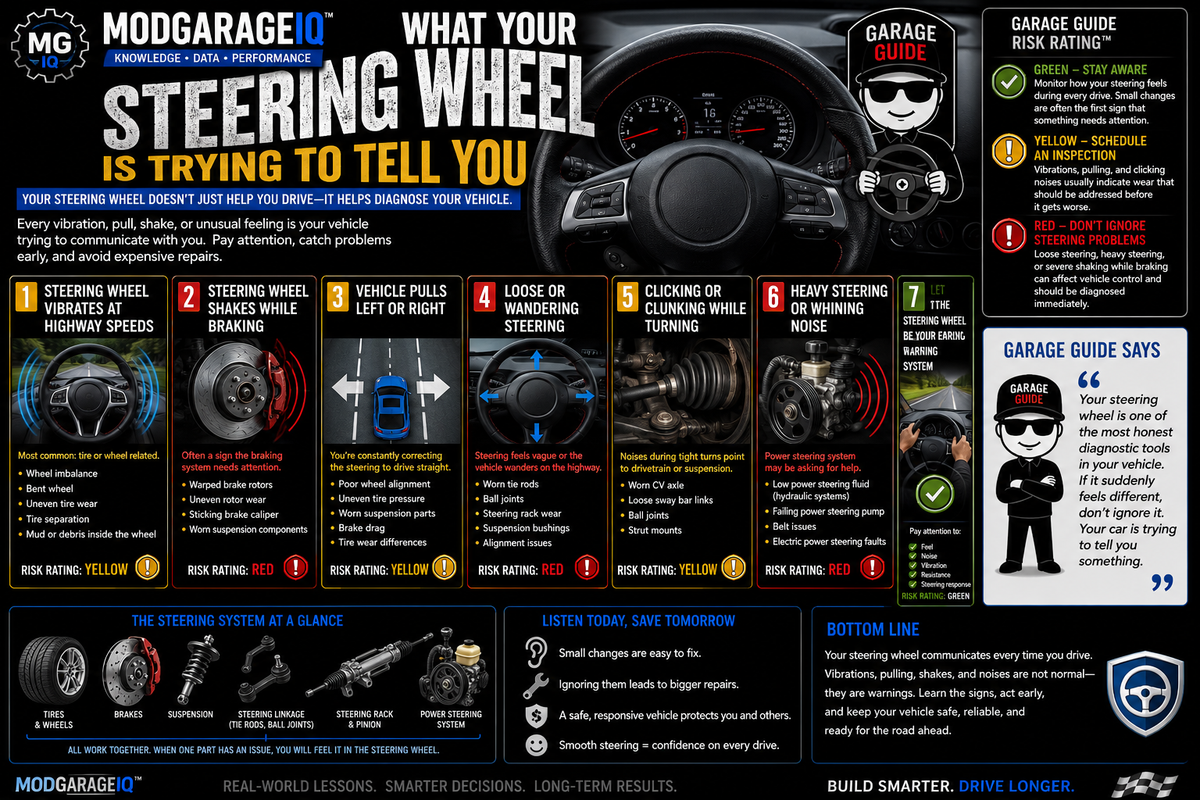
Your Steering Wheel Doesn’t Just Help You Drive—It Helps Diagnose Your Vehicle.
Most drivers think of the steering wheel as just another control.
But every vibration, pull, shake, or unusual feeling is your vehicle trying to communicate with you.
The steering wheel is directly connected to your tires, suspension, steering system, and brakes. When something changes, it’s often one of the first places you’ll notice it.
Learning what those changes mean can help you catch problems early, improve safety, and avoid expensive repairs.
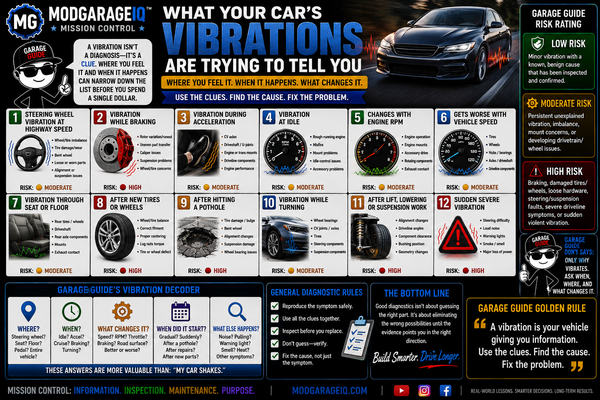
Steering Wheel Vibrates At Highway Speeds
If your steering wheel begins vibrating around 55–75 MPH, the most common cause is tire or wheel related.
Possible causes include:
- Wheel imbalance
- Bent wheel
- Uneven tire wear
- Tire separation
- Mud or debris inside the wheel
The vibration may start small but usually gets worse over time.
🟡 Garage Guide Risk Rating: YELLOW
Smooth steering starts with properly balanced wheels.
Steering Wheel Shakes While Braking
Does the steering wheel shake only when you press the brakes?
That’s often a sign the braking system needs attention.
Common causes include:
- Warped brake rotors
- Uneven rotor wear
- Sticking brake caliper
- Worn suspension components
Ignoring the problem can increase stopping distance and reduce braking confidence.
🔴 Garage Guide Risk Rating: RED
Your brakes should stop the vehicle—not shake the steering wheel.
Vehicle Pulls Left Or Right
If you’re constantly correcting the steering wheel just to drive straight…
Something isn’t right.
Possible causes include:
- Poor wheel alignment
- Uneven tire pressure
- Worn suspension parts
- Brake drag
- Tire wear differences
Besides being frustrating, pulling can accelerate tire wear.
🟡 Garage Guide Risk Rating: YELLOW
A straight road shouldn’t require constant steering corrections.
Loose Or Wandering Steering
If the steering feels vague or the vehicle wanders on the highway…
Inspect the steering and suspension system.
Possible causes include:
- Worn tie rods
- Ball joints
- Steering rack wear
- Suspension bushings
- Alignment issues
Loose steering reduces driver confidence and vehicle control.
🔴 Garage Guide Risk Rating: RED
Loose steering should never become normal.
Clicking Or Clunking While Turning
A clicking noise during tight turns often points toward the drivetrain or suspension.
Possible causes include:
- Worn CV axle
- Loose sway bar links
- Ball joints
- Strut mounts
Small noises today can become major repairs tomorrow.
🟡 Garage Guide Risk Rating: YELLOW
Don’t ignore new sounds while turning.
Heavy Steering Or Whining Noise
If steering suddenly becomes difficult…
Or you hear a whining sound while turning…
The power steering system may be asking for help.
Possible causes include:
- Low power steering fluid (hydraulic systems)
- Failing power steering pump
- Belt issues
- Electric power steering faults
Difficulty steering affects both safety and driver confidence.
🔴 Garage Guide Risk Rating: RED
Steering problems should always be investigated immediately.
Let The Steering Wheel Be Your Early Warning System
Your steering wheel tells you much more than which direction you’re traveling.
Pay attention to changes in:
- Feel
- Noise
- Vibration
- Resistance
- Steering response
Small changes often reveal problems before warning lights ever appear.
🟢 Garage Guide Risk Rating: GREEN
The sooner you notice the symptoms, the easier they usually are to fix.
Garage Guide Says
“Your steering wheel is one of the most honest diagnostic tools in your vehicle. If it suddenly feels different, don’t ignore it. Your car is trying to tell you something.”
Garage Guide Risk Rating™
🟢 GREEN — Stay Aware
Monitor how your steering feels during every drive. Small changes are often the first sign that something needs attention.
🟡 YELLOW — Schedule An Inspection
Vibrations, pulling, and clicking noises usually indicate wear that should be addressed before it gets worse.
🔴 RED — Don’t Ignore Steering Problems
Loose steering, heavy steering, or severe shaking while braking can affect vehicle control and should be diagnosed immediately.
Bottom Line
Your steering wheel does much more than point your vehicle down the road.
It communicates.
Every vibration…
Every pull…
Every shake…
Every new sound…
is information that can help you prevent larger repairs and drive more safely.
Learn to recognize the warning signs.
Trust what your vehicle is telling you.
And fix small problems before they become expensive ones.
Because smart owners don’t just drive their vehicles…
They listen to them.
🏁 Build Smarter. Drive Longer.