The Truth About Cold Air Intakes: Are They Really Worth It?
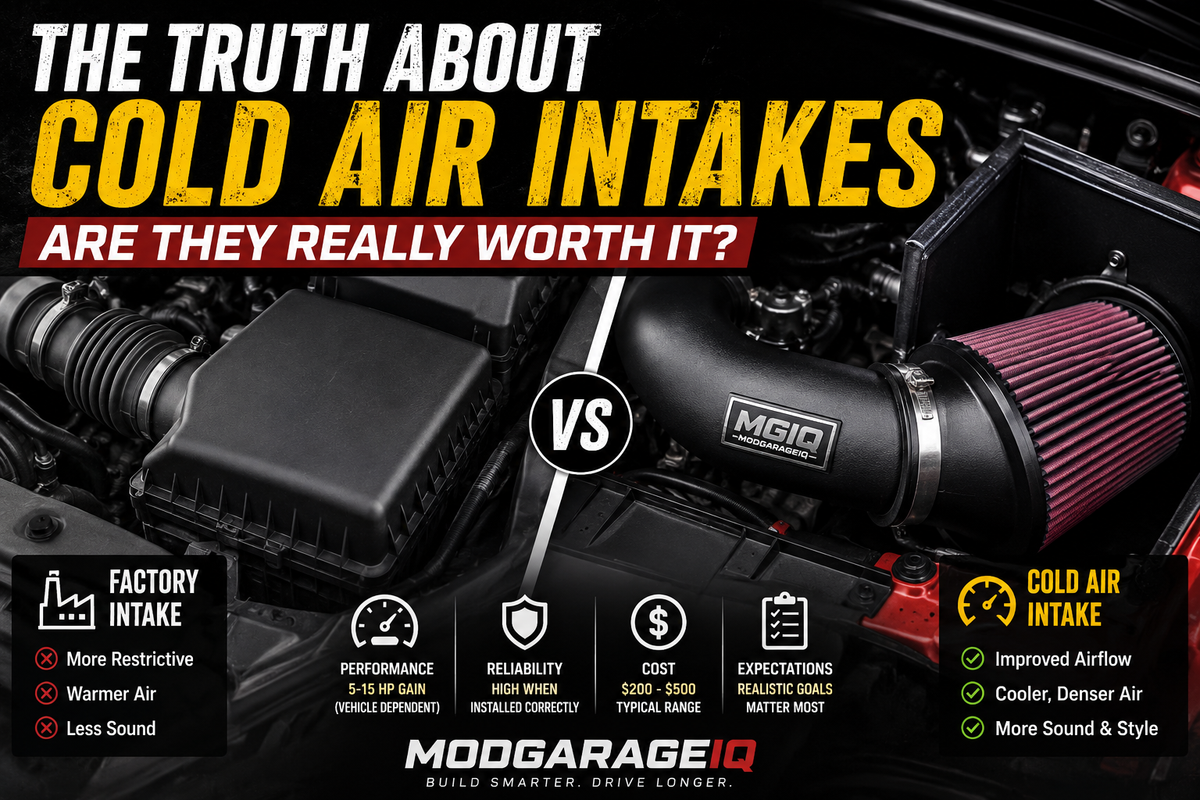
Cold air intakes are often one of the first modifications enthusiasts consider. They're relatively affordable, easy to install, and frequently advertised as a simple way to unlock additional horsepower.
A quick search online will reveal countless claims about dramatic power gains, improved fuel economy, and enhanced performance. However, the reality is often more nuanced.
So, are cold air intakes actually worth the investment?
The answer depends on your goals, your vehicle, and your expectations.
What Does a Cold Air Intake Actually Do?
Every engine requires three basic ingredients to produce power:
- Air
- Fuel
- Spark
A cold air intake is designed to improve the flow of air entering the engine while attempting to draw cooler air from outside the engine compartment.
In theory, cooler air is denser than warm air. Denser air contains more oxygen, allowing the engine to burn more fuel and potentially produce more power.
Most aftermarket intake systems achieve this by using larger intake tubing, less restrictive filters, and revised airflow paths.
Potential Benefits
Improved Throttle Response
One of the most noticeable improvements is often throttle response.
Many drivers report that their vehicle feels more eager to accelerate, particularly during initial throttle inputs.
While this may not always translate into significant horsepower gains, it can improve the overall driving experience.
Increased Induction Sound
For many enthusiasts, the sound is one of the biggest benefits.
Cold air intakes often allow more intake noise to reach the cabin, creating a deeper and more aggressive sound under acceleration.
Turbocharged vehicles may also produce more noticeable turbo spool and blow-off sounds.
Modest Performance Gains
Some vehicles can experience measurable horsepower gains from a properly engineered intake system.
However, the gains are often smaller than many advertisements suggest.
Depending on the platform, gains may range from 5 to 15 horsepower, with some vehicles seeing even less.
What Most Advertisements Don't Tell You
This is where expectations become important.
Modern vehicles are engineered by teams of highly skilled engineers. In many cases, factory intake systems are already quite efficient.
As a result, replacing the factory intake doesn't automatically result in dramatic performance improvements.
Many advertised dyno results are achieved under ideal conditions and may not accurately reflect real-world driving.
Some intake systems can even perform worse than the factory airbox if they draw hot air from the engine bay.
Heat is the enemy of performance, and an intake that prioritizes appearance over function may provide little benefit beyond sound.
Reliability Considerations
One reason cold air intakes remain popular is that they generally have minimal impact on reliability when installed correctly.
Unlike aggressive engine tuning, forced induction, or major internal engine modifications, a quality intake system typically places very little additional stress on engine components.
However, there are still a few considerations.
Filter Maintenance
Performance filters require periodic cleaning or replacement.
Neglecting maintenance can reduce airflow and potentially impact performance.
Water Ingestion
Some intake systems position the filter lower in the vehicle to access cooler air.
While uncommon, driving through deep standing water can create a risk of water ingestion, which can cause severe engine damage.
Poor-Quality Components
Not all intake systems are created equal.
Low-quality filters may allow excessive contaminants into the engine, while poorly designed systems can create turbulence that negatively affects airflow readings.
Choosing a reputable manufacturer is important.
Cost Versus Performance
Most cold air intake systems range from approximately $200 to $500.
When evaluated strictly by horsepower gained per dollar spent, they are not always the most cost-effective modification available.
Depending on the vehicle, a professional tune may provide larger performance gains for a similar investment.
That doesn't mean cold air intakes are a poor choice. It simply means buyers should understand what they're purchasing.
For many owners, the combination of improved sound, appearance, and modest performance gains justifies the cost.
Should You Buy One?
A Cold Air Intake May Be Worth It If:
- You enjoy a more aggressive intake sound.
- You plan additional performance modifications.
- You want a simple and reliable upgrade.
- You appreciate improved engine bay aesthetics.
You May Want To Save Your Money If:
- You're expecting dramatic horsepower increases.
- Your primary goal is maximizing performance per dollar.
- The intake design draws hot air from the engine compartment.
- You haven't addressed maintenance items first.
Final Thoughts
Cold air intakes are neither miracle modifications nor complete wastes of money.
When paired with realistic expectations and a quality design, they can improve the driving experience while maintaining reliability.
The biggest mistake enthusiasts make is expecting a cold air intake to completely transform their vehicle.
In reality, the best modifications are often those that contribute to a balanced build rather than chasing impressive marketing numbers.
At ModGarageIQ, we believe the smartest modifications are the ones that align with your goals, budget, and long-term ownership plans.
A cold air intake can absolutely be part of that strategy—but understanding its limitations is just as important as understanding its benefits.
Build Smarter. Drive Longer.