Signs Your Brake Fluid Needs Replacing
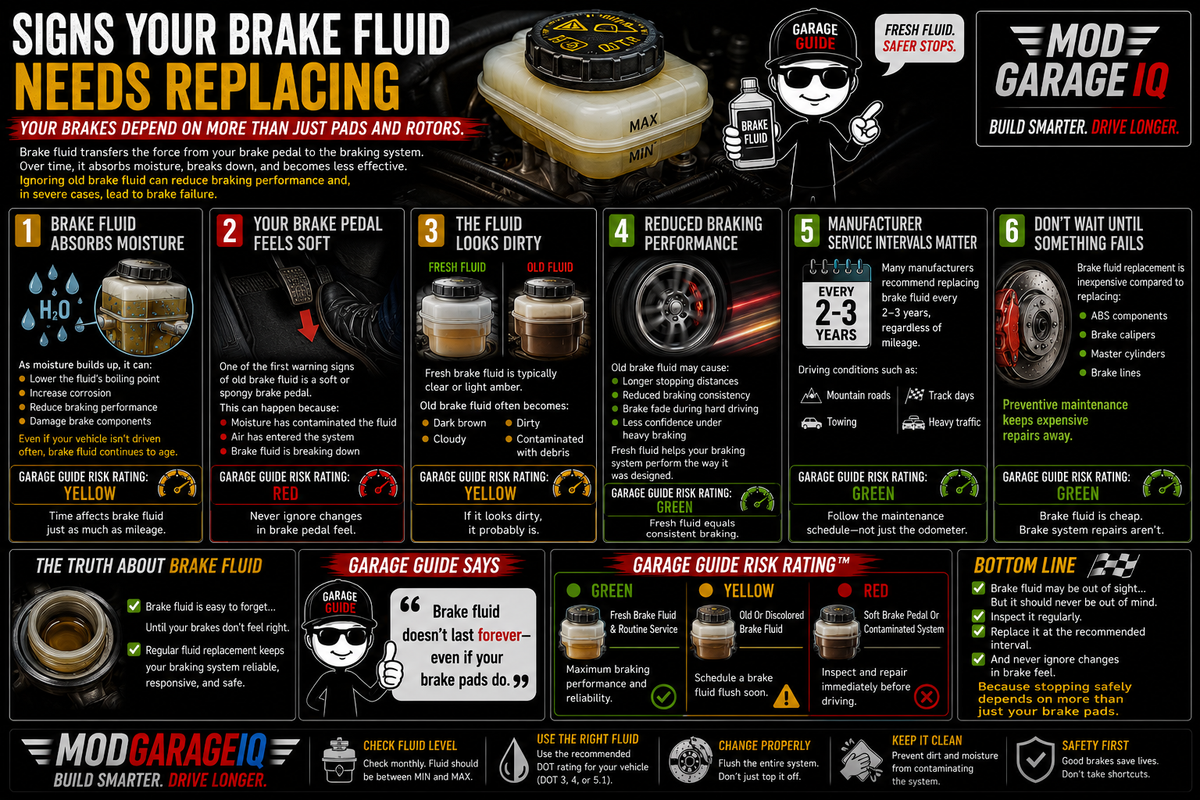
Your Brakes Depend On More Than Just Pads And Rotors.
When people think about brake maintenance, they usually think about brake pads.
But there’s another critical component that’s often forgotten…
Brake fluid.
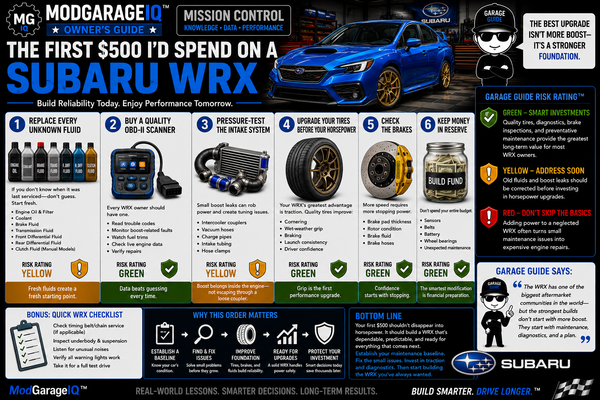
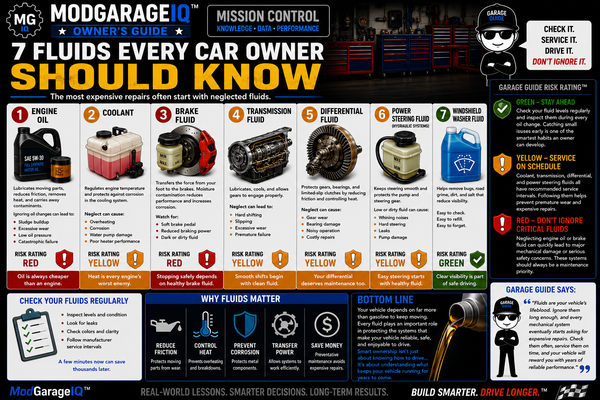
Brake fluid transfers the force from your brake pedal to the braking system.
Over time, it absorbs moisture, breaks down, and becomes less effective.
Ignoring old brake fluid can reduce braking performance and, in severe cases, lead to brake failure.
Brake Fluid Absorbs Moisture
Brake fluid is hygroscopic, meaning it naturally absorbs water from the air.
As moisture builds up, it can:
• Lower the fluid’s boiling point
• Increase corrosion
• Reduce braking performance
• Damage brake components
Even if your vehicle isn’t driven often, brake fluid continues to age.
🟡 Garage Guide Risk Rating: YELLOW
Time affects brake fluid just as much as mileage.
Your Brake Pedal Feels Soft
One of the first warning signs of old brake fluid is a soft or spongy brake pedal.
This can happen because:
• Moisture has contaminated the fluid
• Air has entered the system
• Brake fluid is breaking down
A firm brake pedal is a sign of a healthy hydraulic system.
🔴 Garage Guide Risk Rating: RED
Never ignore changes in brake pedal feel.
The Fluid Looks Dirty
Fresh brake fluid is typically clear or light amber.
Old brake fluid often becomes:
• Dark brown
• Cloudy
• Dirty
• Contaminated with debris
A quick inspection of the brake fluid reservoir can tell you a lot about its condition.
🟡 Garage Guide Risk Rating: YELLOW
If it looks dirty, it probably is.
Reduced Braking Performance
Old brake fluid may cause:
• Longer stopping distances
• Reduced braking consistency
• Brake fade during hard driving
• Less confidence under heavy braking
Fresh fluid helps your braking system perform the way it was designed.
🟢 Garage Guide Risk Rating: GREEN
Fresh fluid equals consistent braking.
Manufacturer Service Intervals Matter
Many manufacturers recommend replacing brake fluid every 2–3 years, regardless of mileage.
Always check your owner’s manual.
Driving conditions such as:
• Mountain roads
• Towing
• Track days
• Heavy traffic
can require more frequent service.
🟢 Garage Guide Risk Rating: GREEN
Follow the maintenance schedule—not just the odometer.
Don’t Wait Until Something Fails
Brake fluid replacement is inexpensive compared to replacing:
• ABS components
• Brake calipers
• Master cylinders
• Brake lines
Preventive maintenance keeps expensive repairs away.
🟢 Garage Guide Risk Rating: GREEN
Brake fluid is cheap. Brake system repairs aren’t.
The Truth About Brake Fluid
Brake fluid is easy to forget…
Until your brakes don’t feel right.
Regular fluid replacement keeps your braking system reliable, responsive, and safe.
Garage Guide Says
“Brake fluid doesn’t last forever—even if your brake pads do.”
Garage Guide Risk Rating™
🟢 Fresh Brake Fluid & Routine Service
Maximum braking performance and reliability.
🟡 Old Or Discolored Brake Fluid
Schedule a brake fluid flush soon.
🔴 Soft Brake Pedal Or Contaminated System
Inspect and repair immediately before driving.
Bottom Line
Brake fluid may be out of sight…
But it should never be out of mind.
Inspect it regularly.
Replace it at the recommended interval.
And never ignore changes in brake feel.
Because stopping safely depends on more than just your brake pads.
🏁 Build Smarter. Drive Longer.
#ModGarageIQ #GarageGuide #BrakeFluid #BrakeMaintenance #BrakeSafety #CarMaintenance #AutomotiveTips #BuildSmarterDriveLonger #CarCare