Signs Of A Failing Wheel Bearing
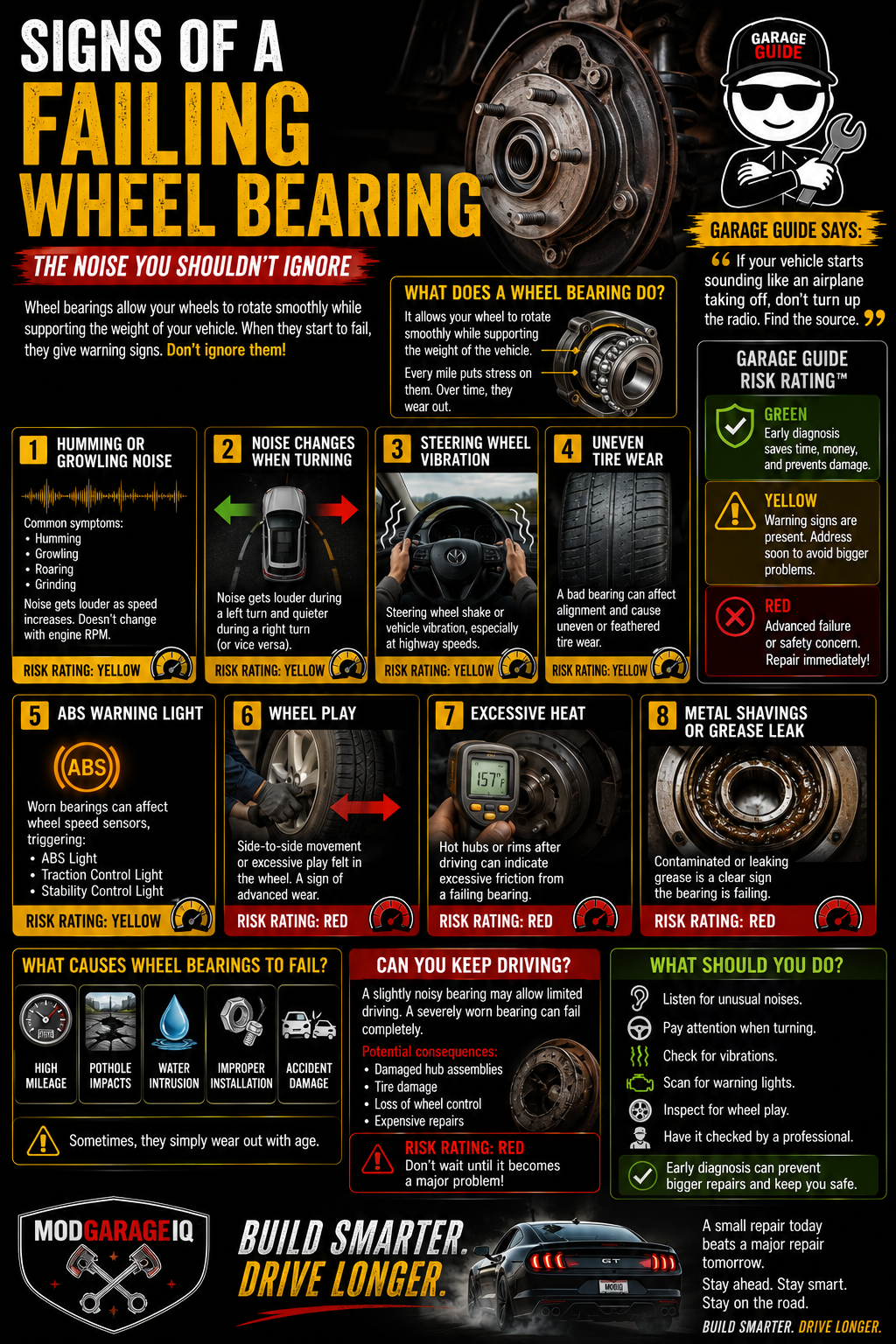
The Noise You Shouldn’t Ignore
Have you ever heard a humming, growling, or grinding noise that gets louder as you drive?
Many drivers assume it’s tire noise.
Sometimes it is.
But sometimes it’s a failing wheel bearing.
The longer you ignore it, the more expensive and dangerous the problem can become.
What Does A Wheel Bearing Do?
A wheel bearing allows your wheel to rotate smoothly while supporting the weight of the vehicle.
Every time you drive, brake, turn, or hit a pothole, your wheel bearings are working.
Over time, they wear out.
When they do, they usually give warning signs.
Humming Or Growling Noise
This is the most common symptom.
A failing wheel bearing often sounds like:
• Humming
• Growling
• Roaring
• Grinding
The sound typically becomes louder as vehicle speed increases.
Unlike engine noise, it usually doesn’t change when the engine RPM changes.
🟡 Garage Guide Risk Rating: YELLOW
One of the earliest warning signs.
Noise Changes When Turning
A worn wheel bearing often changes sound when turning.
For example:
• Noise gets louder during a left turn
• Noise gets quieter during a right turn
Or vice versa.
This happens because the vehicle’s weight shifts and places additional load on the damaged bearing.
🟡 Garage Guide Risk Rating: YELLOW
A strong clue during diagnosis.
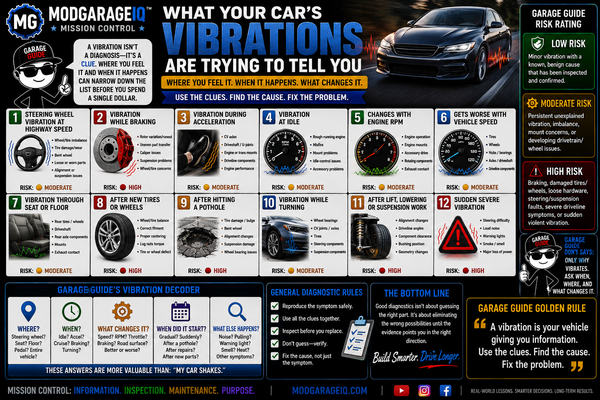
Steering Wheel Vibration
As the bearing continues to wear, vibration may develop.
Symptoms include:
• Steering wheel shake
• Vehicle vibration
• Unstable feeling at highway speeds
While other problems can cause vibration, wheel bearings should be considered.
🟡 Garage Guide Risk Rating: YELLOW
Uneven Tire Wear
A severely worn bearing can affect wheel alignment and tire contact.
Symptoms may include:
• Uneven tire wear
• Feathered tread patterns
• Increased road noise
Replacing tires without addressing the bearing won’t solve the root problem.
🟡 Garage Guide Risk Rating: YELLOW
ABS Warning Light
Many modern vehicles use wheel speed sensors that are integrated into the wheel bearing assembly.
When the bearing begins failing, the sensor can produce inaccurate readings.
Symptoms:
• ABS warning light
• Traction control light
• Stability control warnings
🟡 Garage Guide Risk Rating: YELLOW
Wheel Play
In advanced stages, the wheel may develop noticeable movement.
A technician may detect:
• Side-to-side movement
• Excessive play
• Loose wheel feel
This condition should be addressed immediately.
🔴 Garage Guide Risk Rating: RED
Safety concern.
What Causes Wheel Bearings To Fail?
Common causes include:
• High mileage
• Pothole impacts
• Water intrusion
• Improper installation
• Accident damage
Sometimes bearings simply wear out with age.
Can You Keep Driving?
That depends on the severity.
A slightly noisy bearing may allow limited driving.
A severely worn bearing can fail completely.
Potential consequences include:
• Damaged hub assemblies
• Tire damage
• Loss of wheel control
• Expensive repairs
🔴 Garage Guide Risk Rating: RED
Don’t wait until it becomes a major problem.
Garage Guide Says
“If your vehicle starts sounding like an airplane taking off, don’t turn up the radio. Find the source.”
Garage Guide Risk Rating™
🟢 Early Diagnosis
🟡 Noise, Vibration & Warning Lights
🔴 Excessive Wheel Play & Safety Concerns
Bottom Line
Wheel bearings rarely fail without warning.
The key is recognizing the signs before the problem becomes dangerous or expensive.
If you hear humming, growling, or grinding that changes with vehicle speed, don’t ignore it.
A small repair today is usually cheaper than a major repair tomorrow.
🏁 Build Smarter. Drive Longer.
#ModGarageIQ #GarageGuide #WheelBearing #CarRepair #AutomotiveTips #VehicleMaintenance #DIYMechanic #CarProblems #BuildSmarterDriveLonger #WheelBearingNoise