I Just Bought a BMW 3 Series… Now What?
Before You Tune It, Lower It, Add M-Style Parts, or Start Chasing Horsepower—Figure Out Exactly Which 3 Series You Bought and Establish a Healthy Baseline.
You bought a BMW 3 Series.
Congratulations.
You now own one of the most influential sport-sedan platforms ever produced.
Depending on what you bought, it might be:
A comfortable daily driver.
A luxury commuter.
A naturally aspirated straight-six cruiser.
A turbocharged performance platform.
An xDrive all-weather daily.
A manual-transmission enthusiast car.
Or the beginning of a build that is about to make your bank account extremely familiar with German part numbers. 😂
But before Garage Guide allows us anywhere near the modification catalog, there’s a problem.
Saying:
“I bought a BMW 3 Series.”
doesn’t tell us nearly enough.
E30?
E36?
E46?
E90?
F30?
G20?
328i?
330i?
335i?
340i?
Rear-wheel drive?
xDrive?
Manual?
Automatic?
Different generations can have dramatically different engines, transmissions, electronics, maintenance needs, and modification paths.
So our first question isn’t:
“What should I modify?”
It’s:
“What exactly did I buy?”
Let’s establish the baseline.
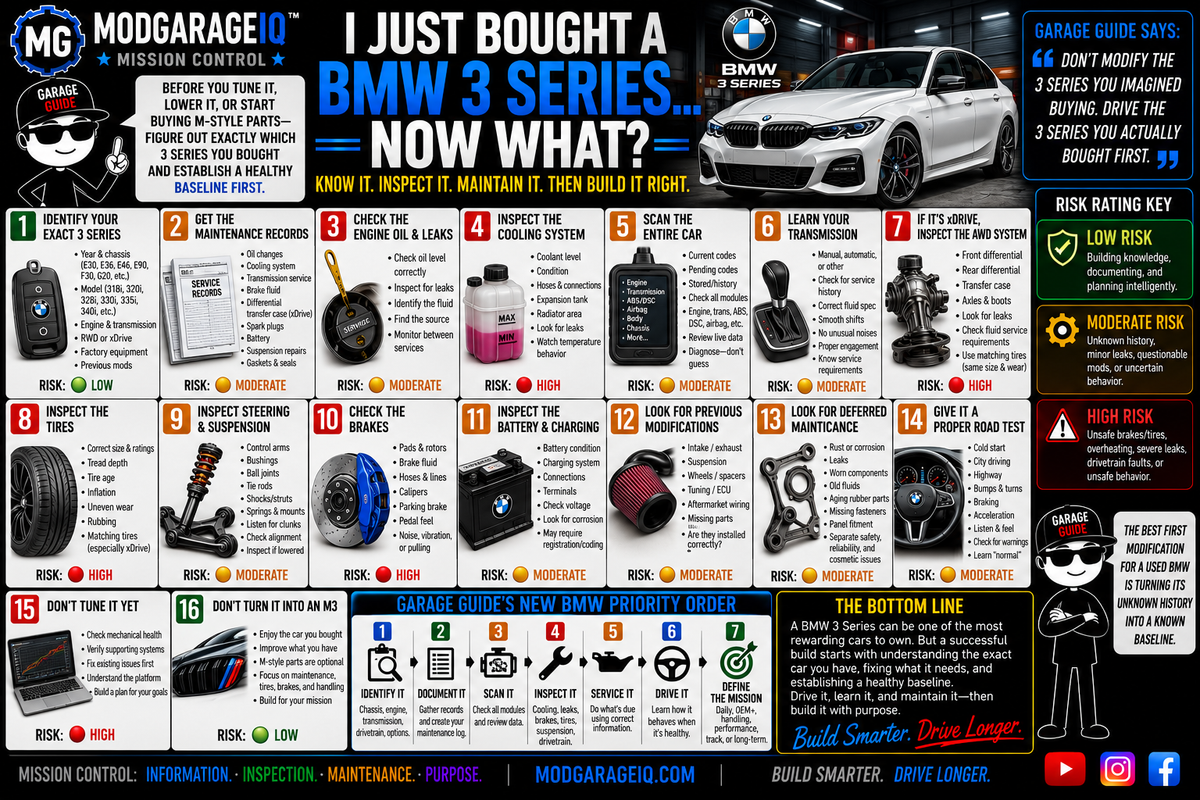
1. Identify Your Exact 3 Series
This is absolutely step one.
Determine your:
- Model year
- Chassis generation
- Exact model
- Engine
- Transmission
- RWD or xDrive
- Mileage
- Factory equipment
- Current modifications
- Available maintenance history
Don’t assume advice for one 3 Series applies to another simply because both cars have a BMW roundel on the hood.
Even two cars wearing similar badges can have important differences depending on year and market.
Know the chassis.
Know the drivetrain.
Know the engine.
🟢 Garage Guide Risk Rating: LOW
Garage Guide Says:
“With a 3 Series, the badge starts the conversation. The chassis and drivetrain tell you what car you actually own.”
2. Get the Maintenance Records
This might be the most valuable accessory that came with the car.
Before replacing parts, figure out what’s already been done.
Look for records involving applicable:
- Engine-oil services
- Cooling-system work
- Transmission service
- Brake-fluid service
- Differential service
- Transfer-case service on applicable xDrive models
- Spark plugs
- Ignition components
- Battery replacement
- Suspension repairs
- Gaskets and seals
- Other generation-specific maintenance
A folder full of receipts may be worth more to you right now than a trunk full of aftermarket parts.
No records?
That’s okay.
It simply means we’re going to establish our own history carefully.
🟡 Garage Guide Risk Rating: MODERATE
Garage Guide Says:
“Unknown history doesn’t mean bad history. It means you haven’t earned the right to assume anything yet.”
3. Check the Engine Oil—and Look for Leaks
Check the oil according to the procedure for your specific BMW.
Depending on generation, that may involve a traditional dipstick or electronic oil-level monitoring.
Then inspect for evidence of leakage.
Don’t panic because you see a little grime.
And don’t dismiss active leakage because:
“BMWs just do that.” 😂
Determine:
- What fluid you’re seeing
- Where it originates
- How quickly it’s being lost
- Whether the fluid level is changing
- Whether repair is required
A leak should be diagnosed—not turned into part of the car’s personality.
🟡 Garage Guide Risk Rating: MODERATE
Significant oil loss can quickly become high risk.
Garage Guide Says:
“‘They all leak’ isn’t a repair procedure.”
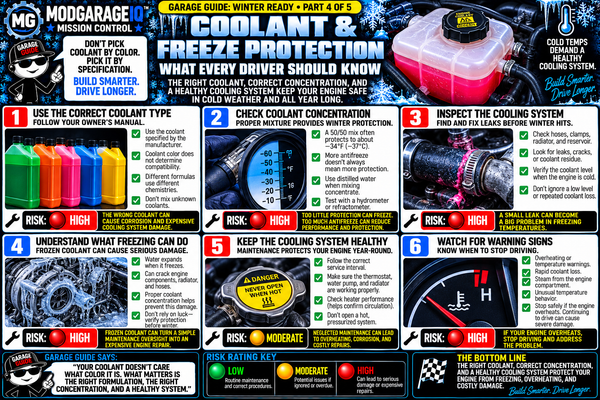
4. Inspect the Cooling System
This gets priority.
Especially on an unfamiliar used BMW, understand the condition of the cooling system before asking the engine to work harder.
With the vehicle cold and using the correct safety procedure, inspect applicable:
- Coolant level
- Coolant condition
- Reservoir/expansion tank
- Hoses
- Connections
- Radiator area
- Evidence of leakage
- Dried coolant residue
- Operating temperature behavior
Different generations use different components and layouts, so research the known service points for your exact chassis and engine.
Never open a hot, pressurized cooling system.
🔴 Garage Guide Risk Rating: HIGH
Overheating can turn an ordinary maintenance issue into major engine damage.
Garage Guide Says:
“Horsepower creates heat. Make sure the stock cooling system can handle stock horsepower first.”
5. Scan the Entire Car
Here’s where BMW ownership gets interesting.
A basic check-engine-light scan can be useful.
But depending on the vehicle and equipment available, BMW-specific diagnostics may reveal information from multiple control modules.
Look for applicable:
- Current faults
- Pending faults
- Stored/history faults
- Misfire information
- Relevant live data
- Transmission faults
- ABS/DSC faults
- Body/electrical faults
- Other module information
And remember:
Fault code ≠ failed part.
Use the information to guide diagnosis.
Don’t immediately order the component mentioned in the description.
🟡 Garage Guide Risk Rating: MODERATE
Garage Guide Says:
“The more computers the car has, the more valuable good diagnostics become.”
6. Learn Which Transmission You Have
Manual?
Traditional automatic?
Another transmission configuration depending on generation?
Identify it.
Then determine:
- Correct fluid specification
- Applicable service requirements
- Previous service history
- Normal operating behavior
During your road test, pay attention to:
- Engagement
- Shift quality
- Cold behavior
- Warm behavior
- Hesitation
- Shudder
- Slipping
- Unusual noises
Manual owners should also evaluate:
- Clutch engagement
- Clutch slip
- Gear engagement
- Shifter feel
- Unusual drivetrain noises
Don’t wait for the transmission to behave badly before learning what normal feels like.
🟡 Garage Guide Risk Rating: MODERATE
Garage Guide Says:
“‘Lifetime fluid’ and ‘I’m keeping this car for a long time’ deserve a thoughtful conversation.”
7. If It’s xDrive, Inspect the Whole AWD System
If your 3 Series has xDrive, don’t treat it like a rear-wheel-drive car with an extra badge.
You now have additional drivetrain components to understand.
Depending on the specific model, inspect and research applicable:
- Front differential
- Rear differential
- Transfer case
- Axles
- Boots
- Seals
- Fluid-service requirements
- Tire compatibility
And tires become particularly important.
Large differences in tire size, circumference, wear, or incorrect fitment can create problems on AWD vehicles.
Follow BMW’s requirements for your specific model.
🔴 Garage Guide Risk Rating: HIGH
Garage Guide Says:
“On AWD cars, four tires aren’t four separate purchases. They’re part of one drivetrain.”
8. Inspect the Tires
Read the tires before replacing them.
Check:
- Brand/model
- Correct size
- Tread depth
- Tire age
- Inflation
- Sidewall condition
- Matching setup
- Uneven wear
- Evidence of rubbing
Uneven wear may provide clues about:
- Alignment
- Suspension wear
- Steering components
- Inflation
- Ride-height changes
- Wheel fitment
And if the car is wearing aftermarket wheels?
Verify the setup rather than assuming the previous owner got everything right.
🔴 Garage Guide Risk Rating: HIGH
Garage Guide Says:
“Before admiring the wheels, inspect the four pieces of rubber doing the actual work.”
9. Inspect the Steering and Suspension
The 3 Series earned much of its reputation through chassis balance and steering behavior.
So if yours feels sloppy, unstable, noisy, or vague?
Don’t automatically assume:
“That’s just how an old BMW drives.”
Inspect applicable:
- Control arms
- Bushings
- Ball joints
- Tie rods
- Shocks/struts
- Springs
- Mounts
- Wheel bearings
- Sway-bar components
- Aftermarket suspension parts
Look for:
- Clunks
- Wandering
- Vibration
- Uneven tire wear
- Excessive movement
- Poor ride quality
If the car has been lowered, identify what was installed.
🟡 Garage Guide Risk Rating: MODERATE
Severe steering or suspension wear can become high risk.
Garage Guide Says:
“Don’t modify BMW handling until you’ve experienced BMW handling with healthy parts.”
10. Check the Brakes
Performance car or base commuter:
Doesn’t matter.
Brakes come first.
Inspect applicable:
- Pads
- Rotors
- Fluid
- Hoses
- Lines
- Calipers
- Parking brake
- Pedal feel
During the road test, pay attention to:
- Pulsation
- Pulling
- Grinding
- Squealing
- Vibration
- Warning messages
- Abnormal pedal behavior
If you’re eventually building the car for spirited driving, autocross, or track use, brake strategy becomes even more important.
🔴 Garage Guide Risk Rating: HIGH
Garage Guide Says:
“The first performance test isn’t how quickly it reaches 60. It’s whether it stops straight afterward.”
11. Inspect the Battery and Charging System
Modern BMWs can be very sensitive to electrical health.
Test:
- Battery condition
- Charging-system performance
- Connections
- Terminals
- Evidence of corrosion
- Battery age
And depending on generation, battery replacement may involve vehicle-specific registration/coding procedures.
That’s exactly why we identify the car before throwing a battery into it.
Low voltage can also create strange symptoms that look much more dramatic than the actual problem.
🟡 Garage Guide Risk Rating: MODERATE
Garage Guide Says:
“Before diagnosing fifteen electrical problems, make sure the car has fifteen healthy volts’ worth of reasons to complain.” 😂
12. Look for Previous Modifications
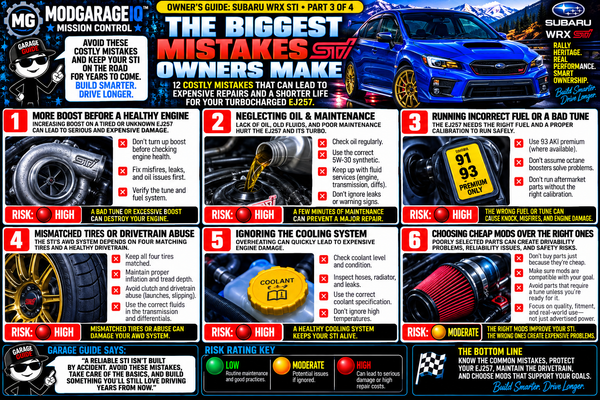
BMW 3 Series owners modify things.
A lot. 😂
Look for:
- Intake systems
- Exhaust components
- Charge/intake plumbing where applicable
- Suspension
- Wheels
- Spacers
- Lighting
- Audio
- Aftermarket wiring
- Engine-bay modifications
- Tuning hardware/software evidence
- Cosmetic M-style parts
- Removed factory equipment
Again:
Aftermarket doesn’t automatically mean bad.
But unknown aftermarket work means:
Investigate.
Find out what was changed and whether the modification makes sense as a complete system.
🟡 Garage Guide Risk Rating: MODERATE
Garage Guide Says:
“The previous owner’s modification becomes your maintenance item the moment you buy the car.”
13. Look for Evidence of Deferred Maintenance
This is where a cheap BMW can become an expensive BMW.
One neglected item usually isn’t the killer.
It’s the stack:
Small leak.
Worn bushing.
Old tires.
Weak battery.
Cooling issue.
Brake service due.
Suspension noise.
Transmission history unknown.
Suddenly your “great deal” needs thousands of dollars before modification even enters the conversation.
So prioritize the problems.
Separate:
Safety.
Reliability.
Maintenance.
Cosmetics.
Modifications.
In that order.
🟡 Garage Guide Risk Rating: MODERATE
Garage Guide Says:
“The purchase price tells you what the BMW cost yesterday. Deferred maintenance tells you what it costs tomorrow.”
14. Give It a Proper Road Test
Turn the music down.
Garage Guide is listening. 😎
Drive the car:
- From cold
- Fully warmed
- Around town
- At highway speed
- Over uneven pavement
- Through turns
- During braking
- Under reasonable acceleration
Pay attention to:
Engine.
Transmission.
Steering.
Suspension.
Brakes.
Temperature.
Vibration.
Noises.
Warning messages.
Then write down anything unusual.
Don’t rely on memory.
This is the beginning of your baseline.
🟡 Garage Guide Risk Rating: MODERATE
Garage Guide Says:
“Your first drive should create a repair list—not a parts wishlist.”
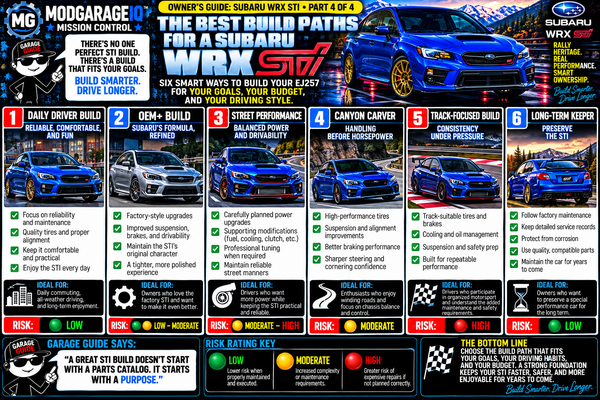
15. Don’t Tune It Yet
😂😂😂
There it is.
Garage Guide knows why some of you bought the turbo BMW.
You already know what software you want.
You’ve watched the videos.
You’ve seen the dyno charts.
Your buddy said:
“Bro, it’s basically free horsepower.”
Cool.
We’re still waiting.
Before changing calibration, establish the health of the engine and supporting systems.
Depending on your exact platform, that may mean evaluating applicable:
- Ignition system
- Fuel system
- Cooling system
- Intake/charge system
- Turbocharger system
- Transmission
- Drivetrain
- Existing faults
- Maintenance history
Then build a performance plan around the actual vehicle.
🔴 Garage Guide Risk Rating: HIGH
Garage Guide Says:
“Free horsepower gets expensive when you’re adding it to problems you haven’t found yet.”
16. Don’t Turn It Into an M3 Before Learning to Enjoy the 3 Series
This one might hurt. 😂
M-style bumper.
M-style mirrors.
M-style wheels.
M-style grille.
M-style badges.
Garage Guide would like everyone to step away from the badge drawer for a moment.
Your 328i, 330i, 335i, or 340i doesn’t have to pretend to be something else to be worth enjoying.
Build your car.
Improve:
- Maintenance
- Tires
- Brakes
- Handling
- Appearance
- Performance
But understand the platform you actually own.
🟢 Garage Guide Risk Rating: LOW
Garage Guide Says:
“The goal isn’t to convince strangers you bought an M3. It’s to make your 3 Series the best version of itself.”
Garage Guide’s New BMW Priority Order
🔵
1 — IDENTIFY IT
Chassis.
Engine.
Transmission.
Drivetrain.
Options.
🟢
2 — DOCUMENT IT
Gather records.
Create your own maintenance log.
🟡
3 — SCAN IT
Not just the check-engine light.
Learn what the car’s modules are telling you.
🔴
4 — INSPECT IT
Cooling.
Oil leaks.
Brakes.
Tires.
Steering.
Suspension.
Drivetrain.
🟠
5 — SERVICE WHAT’S DUE
Use information appropriate to the exact vehicle.
🔵
6 — DRIVE IT
Learn healthy behavior.
🟢
7 — DEFINE THE MISSION
Daily?
OEM+?
Handling?
Touring?
Performance?
Track?
Long-term ownership?
Then—and only then—we build.
Garage Guide Risk Rating
🟢 LOW RISKIdentifying the exact car, collecting records, documenting maintenance, learning the platform, and planning intelligently.
🟡 MODERATE RISKUnknown history, minor leaks, worn suspension components, questionable previous modifications, electrical concerns, or uncertain service history.
🔴 HIGH RISKOverheating, unsafe brakes or tires, serious steering/suspension problems, significant fluid loss, drivetrain faults, or adding substantial performance before establishing mechanical health.
The Bottom Line
The BMW 3 Series can be one of the most rewarding used cars to own.
But the smartest ownership experience begins with understanding exactly what you’re dealing with.
Identify the chassis.
Identify the engine.
Learn the maintenance history.
Scan the car.
Inspect the cooling system.
Check for leaks.
Understand the transmission.
Inspect xDrive if equipped.
Read the tires.
Evaluate the suspension.
Check the brakes.
And investigate anything the previous owner changed.
Then drive it.
Because before you build a faster BMW…
Before you build a lower BMW…
Before you build a louder BMW…
Build a known BMW.
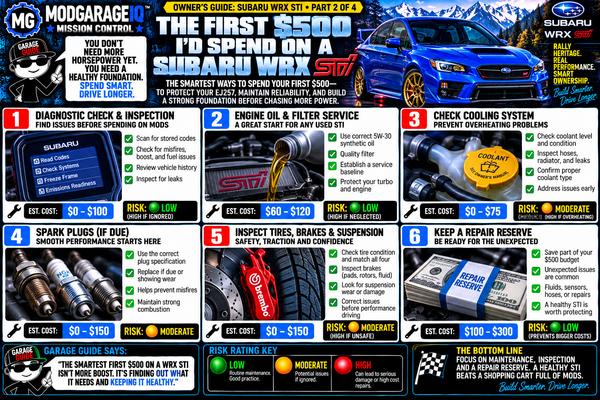
Tomorrow, 10/6, Garage Guide gets $500.
And something tells me the BMW parts department is going to find that hilarious. 😂💸
Garage Guide Says:
“The best first modification for a used BMW is turning its unknown history into a known baseline.”
Build Smarter. Drive Longer.
#ModGarageIQ #GarageGuide #BMW #BMW3Series #E46 #E90 #F30 #G20 #BMWOwners #BMWMaintenance #BMWBuild #GermanCars #OwnersGuide #MissionControl #AutomotiveEducation #BuildSmarterDriveLonger