How Long Should Brake Pads Last?
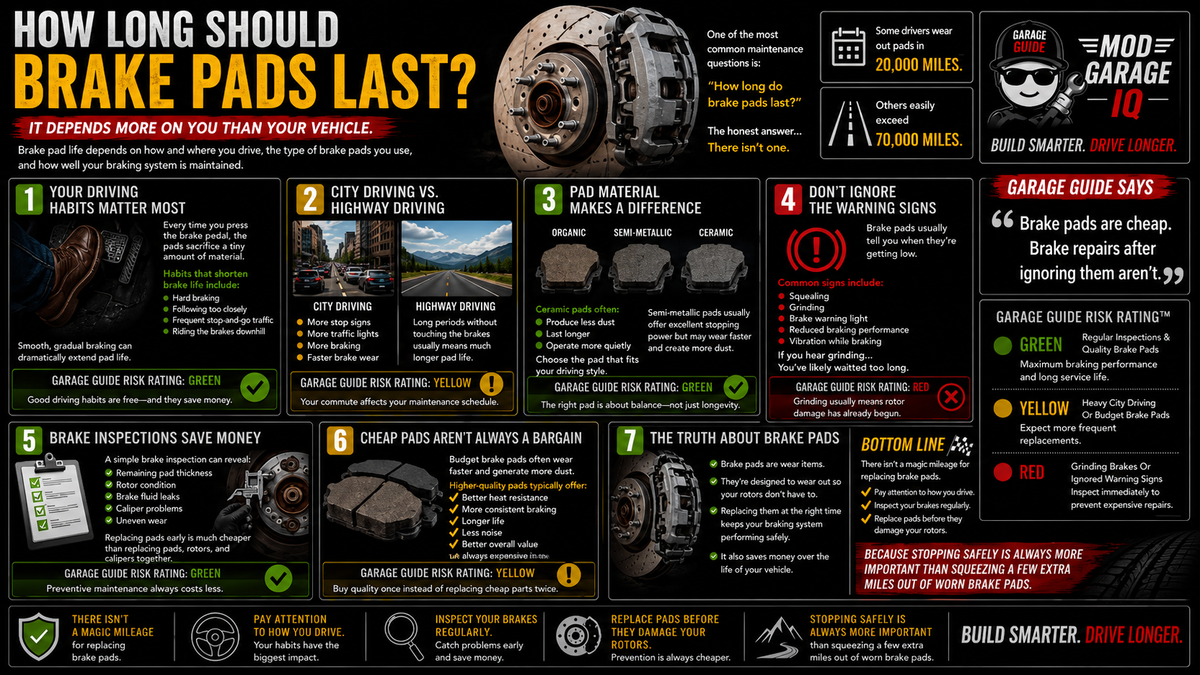
It Depends More On You Than Your Vehicle.
One of the most common maintenance questions is:
“How long do brake pads last?”
The honest answer…
There isn’t one.
Brake pad life depends on how and where you drive, the type of brake pads you use, and how well your braking system is maintained.
Some drivers wear out pads in 20,000 miles.
Others easily exceed 70,000.
Understanding what affects brake life can help you avoid unnecessary repairs—and stay safer on the road.
Your Driving Habits Matter Most
Every time you press the brake pedal, the pads sacrifice a tiny amount of material.
Aggressive driving accelerates that wear.
Habits that shorten brake life include:
• Hard braking
• Following too closely
• Frequent stop-and-go traffic
• Riding the brakes downhill
Smooth, gradual braking can dramatically extend pad life.
🟢 Garage Guide Risk Rating: GREEN
Good driving habits are free—and they save money.
City Driving Vs. Highway Driving
Where you drive is just as important as how you drive.
City driving typically means:
• More stop signs
• More traffic lights
• More braking
• Faster brake wear
Highway driving often allows long periods without touching the brakes.
That usually translates into much longer pad life.
🟡 Garage Guide Risk Rating: YELLOW
Your commute affects your maintenance schedule.
Pad Material Makes A Difference
Not all brake pads wear at the same rate.
Common types include:
• Organic
• Semi-metallic
• Ceramic
Ceramic pads often:
• Produce less dust
• Last longer
• Operate more quietly
Semi-metallic pads usually offer excellent stopping power but may wear faster and create more brake dust.
Choose the pad that fits your driving style.
🟢 Garage Guide Risk Rating: GREEN
The right pad is about balance—not just longevity.
Don’t Ignore The Warning Signs
Brake pads usually tell you when they’re getting low.
Common signs include:
• Squealing
• Grinding
• Brake warning light
• Reduced braking performance
• Vibration while braking
If you hear grinding…
You’ve likely waited too long.
🔴 Garage Guide Risk Rating: RED
Grinding usually means rotor damage has already begun.
Brake Inspections Save Money
Routine inspections allow you to replace pads before they damage other components.
A simple brake inspection can reveal:
• Remaining pad thickness
• Rotor condition
• Brake fluid leaks
• Caliper problems
• Uneven wear
Replacing pads early is much cheaper than replacing pads, rotors, and calipers together.
🟢 Garage Guide Risk Rating: GREEN
Preventive maintenance always costs less.
Cheap Pads Aren’t Always A Bargain
Budget brake pads often wear faster and generate more dust.
Higher-quality pads typically offer:
• Better heat resistance
• More consistent braking
• Longer life
• Less noise
• Better overall value
The cheapest option isn’t always the least expensive in the long run.
🟡 Garage Guide Risk Rating: YELLOW
Buy quality once instead of replacing cheap parts twice.
The Truth About Brake Pads
Brake pads are wear items.
They’re designed to wear out so your rotors don’t have to.
Replacing them at the right time keeps your braking system performing safely and saves money over the life of your vehicle.
Garage Guide Says
“Brake pads are cheap. Brake repairs after ignoring them aren’t.”
Garage Guide Risk Rating™
🟢 Regular Inspections & Quality Brake Pads
Maximum braking performance and long service life.
🟡 Heavy City Driving Or Budget Brake Pads
Expect more frequent replacements.
🔴 Grinding Brakes Or Ignored Warning Signs
Inspect immediately to prevent expensive repairs.
Bottom Line
There isn’t a magic mileage for replacing brake pads.
Pay attention to how you drive.
Inspect your brakes regularly.
Replace pads before they damage your rotors.
Because stopping safely is always more important than squeezing a few extra miles out of worn brake pads.
🏁 Build Smarter. Drive Longer.
#ModGarageIQ #GarageGuide #BrakePads #BrakeMaintenance #CarMaintenance #AutomotiveTips #BuildSmarterDriveLonger #BrakeSafety #CarCare