Best Build Paths for the Honda CR-V
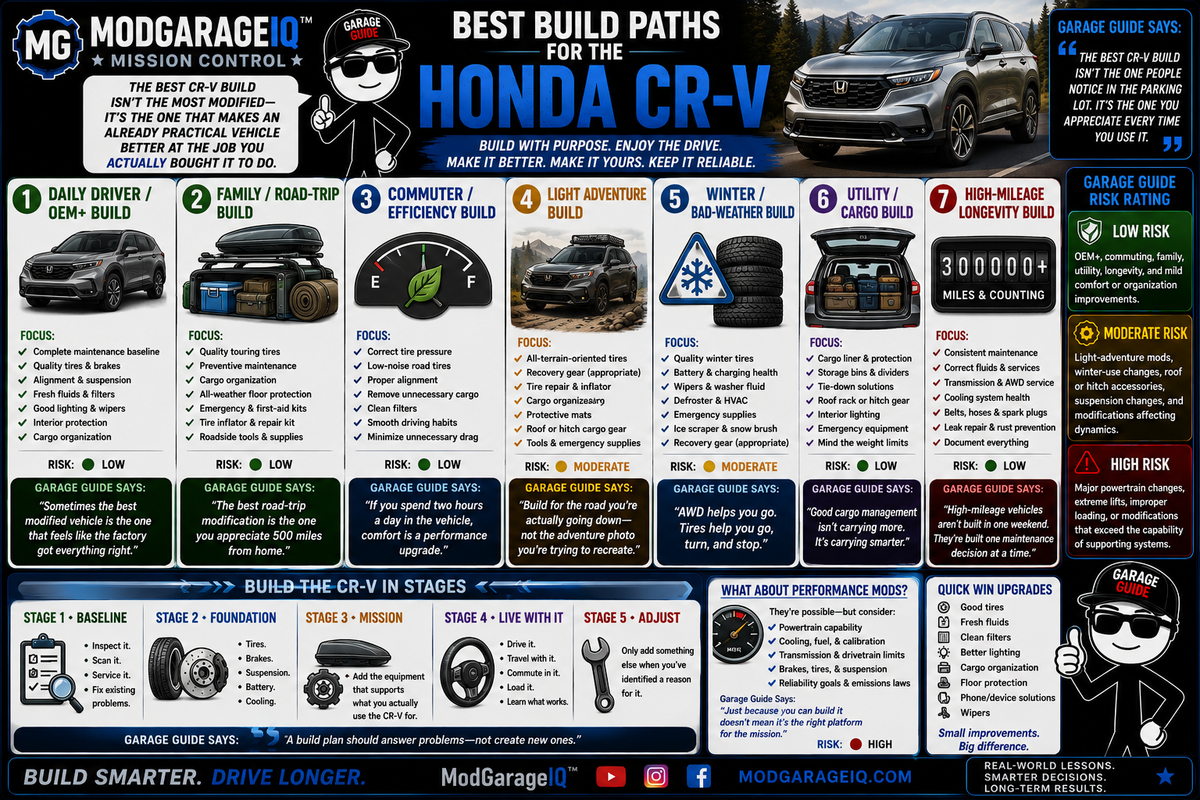
The Best CR-V Build Isn’t the Most Modified—It’s the One That Makes an Already Practical Vehicle Better at the Job You Actually Bought It to Do.
The Honda CR-V probably isn’t the first vehicle that comes to mind when someone says:
“Let’s build it.”
And that’s exactly why this article matters.
Building a vehicle doesn’t have to mean adding huge wheels, chasing horsepower, lowering it, lifting it, or turning it into something completely different.
Sometimes a good build simply takes what a vehicle already does well and makes it better.
The CR-V is already designed around:
Practicality.
Comfort.
Efficiency.
Cargo space.
Everyday usability.
Available all-wheel drive.
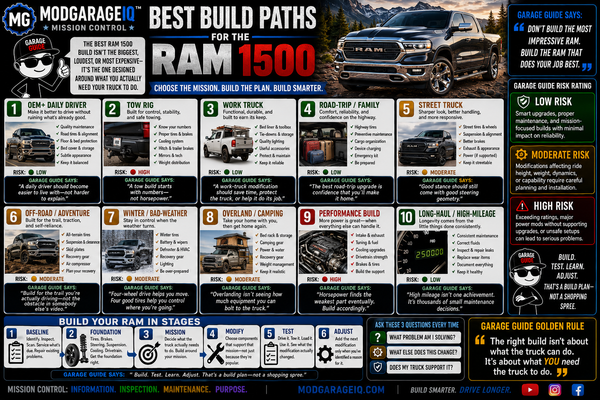
So instead of trying to turn a CR-V into something it was never meant to be, let’s look at several build paths that actually make sense.
1. The Daily Driver / OEM+ Build
For most CR-V owners, this is the build I’d recommend.
The mission is simple:
Keep everything you already like about the CR-V while improving its condition, comfort, and usefulness.
Start with:
- Complete maintenance baseline
- Quality tires
- Healthy brakes
- Proper alignment
- Fresh fluids where needed
- Good battery
- Quality replacement suspension components when necessary
- Fresh wipers
- Good lighting
- Interior protection
- Cargo organization
Then address the little things you’ve noticed during ownership.
Maybe that’s better floor protection.
Maybe it’s a cargo tray.
Maybe it’s replacing worn suspension components and restoring the ride quality.
Maybe it’s simply getting every neglected maintenance item current.
Nothing about this build needs to attract attention.
That’s the point.
🟢 Garage Guide Risk Rating: LOW
OEM+ preserves the CR-V’s greatest strengths instead of sacrificing them for modifications it doesn’t need.
Garage Guide Says:
“Sometimes the best modified vehicle is the one that feels like the factory got everything right.”
2. The Family / Road-Trip Build
A CR-V makes a lot of sense as a family vehicle.
So build around the things that make long trips easier.
Consider:
- Quality touring tires
- Preventive maintenance
- Cargo organization
- All-weather floor protection
- Seat protection where useful
- Phone/device charging
- Emergency supplies
- First-aid kit
- Tire inflator
- Tire-repair equipment appropriate for the vehicle
- Roadside tools
- Sun protection
- Roof or hitch-mounted cargo solutions where appropriate
But there’s one important rule:
Don’t turn cargo capacity into an excuse to overload the vehicle.
Know the applicable vehicle and accessory weight limits.
A road-trip build should make traveling easier, not simply give you more places to attach things.
🟢 Garage Guide Risk Rating: LOW
Provided vehicle and accessory ratings are respected, this build focuses mainly on organization, comfort, and preparedness.
Garage Guide Says:
“The best road-trip modification is the one you appreciate 500 miles from home.”
3. The Commuter / Efficiency Build
Maybe your CR-V spends most of its life doing exactly what millions of CR-Vs do:
Going to work.
That’s a mission worth optimizing.
Focus on:
- Correct tire pressure
- Quality low-noise road tires appropriate for your needs
- Proper alignment
- Preventive maintenance
- Removing unnecessary cargo
- Healthy brakes
- Clean filters
- Smooth driving habits
- Keeping unnecessary exterior drag-producing accessories to a minimum when they’re not needed
The goal isn’t turning the vehicle into some extreme fuel-economy experiment.
It’s reducing the little inefficiencies that accumulate during everyday use.
And don’t forget comfort.
If you spend hundreds of hours every year commuting, improvements to organization, cleanliness, phone integration, and cabin comfort can matter more than horsepower ever would.
🟢 Garage Guide Risk Rating: LOW
Garage Guide Says:
“If you spend two hours a day in the vehicle, comfort is a performance upgrade.”
4. The Light Adventure Build
Here’s where things get interesting.
An AWD CR-V with appropriate tires can make a useful vehicle for:
- Camping
- Trailheads
- Gravel roads
- Snowy conditions
- Outdoor recreation
- Mild unpaved travel
But notice what I didn’t say:
Hardcore off-roader.
Build within the vehicle’s intended capability.
Useful upgrades might include:
- Appropriate all-terrain-oriented tires
- Full-size spare solution where practical and appropriate
- Tire repair kit
- Portable inflator
- Recovery equipment appropriate to your use
- Cargo organization
- Protective mats
- Additional exterior lighting where legal and genuinely useful
- Roof or hitch cargo equipment
- Basic tools
- Emergency supplies
Be cautious with extreme suspension lifts, oversized tires, and modifications that significantly change vehicle geometry or road manners.
🟡 Garage Guide Risk Rating: MODERATE
The farther you move from the original suspension, tire, and drivetrain configuration, the more important fitment and supporting considerations become.
Garage Guide Says:
“Build for the road you’re actually going down—not the adventure photo you’re trying to recreate.”
5. The Winter / Bad-Weather Build
For owners in climates with snow, ice, heavy rain, and cold temperatures, this may be the smartest specialty build.
Start with the thing that matters most:
Tires.
Depending on your conditions, quality winter tires can dramatically change how confidently the vehicle performs in cold-weather environments.
Then consider:
- Battery health
- Wipers
- Washer fluid appropriate for the climate
- Exterior lighting
- Defroster operation
- HVAC performance
- Emergency supplies
- Snow brush and scraper
- Portable inflator
- Basic recovery equipment
- Floor protection
And remember:
AWD can help the vehicle accelerate in low-traction conditions.
It does not eliminate the need for tire grip when:
Turning.
Or…
Stopping.
🟡 Garage Guide Risk Rating: MODERATE
Bad-weather driving always requires appropriate equipment and judgment regardless of drivetrain.
Garage Guide Says:
“AWD helps you go. Tires help you go, turn, and stop.”
6. The Utility / Cargo Build
Some owners bought a CR-V because they don’t need a pickup truck.
They just need something that can carry stuff.
Build around organization.
Consider:
- Cargo liner
- Storage bins
- Dividers
- Tie-down solutions using appropriate mounting points
- Seat-back organizers
- Protective covers
- Roof-rack equipment where appropriate
- Hitch-mounted cargo solutions where properly equipped
- Interior lighting improvements
- Emergency equipment storage
But always pay attention to weight.
Cargo accessories themselves weigh something.
Then the cargo weighs something.
Then passengers weigh something.
Stay within the applicable vehicle and accessory limits.
🟢 Garage Guide Risk Rating: LOW
Garage Guide Says:
“Good cargo management isn’t carrying more. It’s carrying smarter.”
7. The High-Mileage Longevity Build
This might be my favorite CR-V build.
Forget appearance.
Forget horsepower.
The goal is:
300,000-mile mentality.
That doesn’t mean we’re promising any specific mileage.
It means we’re building around longevity.
Prioritize:
- Consistent oil service
- Correct fluids
- Transmission maintenance
- AWD system maintenance where applicable
- Cooling-system health
- Brake-fluid maintenance
- Spark plugs when due
- Belts and hoses
- Leak repair
- Suspension wear
- Wheel bearings
- Battery and charging health
- Rust prevention where appropriate
- Documentation
Create a maintenance log.
Keep receipts.
Record mileage.
Inspect the vehicle between services.
Learn what normal sounds and feels like.
The “modification” here is changing the way you manage ownership.
🟢 Garage Guide Risk Rating: LOW
Garage Guide Says:
“High-mileage vehicles aren’t built in one weekend. They’re built one maintenance decision at a time.”
What About Performance Mods?
Can you modify a CR-V for performance?
Of course.
Almost anything mechanical can be modified.
But before spending money, ask:
What am I trying to accomplish?
Different CR-V generations use different powertrains, and modification potential varies substantially.
If you’re considering meaningful powertrain changes, first evaluate:
- Engine health
- Transmission capability
- Cooling
- Fuel requirements
- Calibration
- Drivetrain
- Brakes
- Tires
- Reliability goals
- Emissions/legal requirements applicable to you
And then ask the uncomfortable question:
Would I be happier starting with a platform designed around performance?
Sometimes the smartest build decision is recognizing the strengths of the vehicle you already own.
🔴 Garage Guide Risk Rating: HIGH
Major powertrain modifications increase complexity, cost, and mechanical risk.
Garage Guide Says:
“Just because you can build it doesn’t mean it’s the right platform for the mission.”
Build the CR-V in Stages
Whatever direction you choose, use the same progression.
Stage 1 — BASELINE
Inspect it.
Scan it.
Service it.
Fix existing problems.
Stage 2 — FOUNDATION
Tires.
Brakes.
Suspension.
Battery.
Cooling.
Stage 3 — MISSION
Add the equipment that supports what you actually use the CR-V for.
Stage 4 — LIVE WITH IT
Drive it.
Travel with it.
Commute in it.
Load it.
Learn what works.
Stage 5 — ADJUST
Only add something else when you’ve identified a reason for it.
Garage Guide Says:
“A build plan should answer problems—not create new ones.”
Garage Guide Risk Rating
🟢 LOW RISKOEM+, commuting, family, utility, longevity, and mild comfort or organization improvements.
🟡 MODERATE RISKLight-adventure modifications, winter-use changes, roof or hitch accessories, suspension changes, and modifications affecting vehicle dynamics.
🔴 HIGH RISKMajor powertrain changes, extreme suspension modifications, improper loading, or modifications that exceed the capability of supporting systems.
The Bottom Line
The Honda CR-V doesn’t need to become something extreme to become better.
The best build might be:
A better commuter.
A better family vehicle.
A better road-trip companion.
A better winter vehicle.
A better light-adventure vehicle.
A better cargo hauler.
Or simply…
A CR-V you’re trying to keep healthy for a very long time.
That’s the beauty of building around purpose.
You don’t measure success by how many parts you’ve installed.
You measure it by whether the vehicle does its job better than it did before.
Garage Guide Says:
“The best CR-V build isn’t the one people notice in the parking lot. It’s the one you appreciate every time you use it.”
Build Smarter. Drive Longer.
#ModGarageIQ #GarageGuide #HondaCRV #CRV #CRVBuild #HondaOwners #OEMPlus #DailyDriver #AdventureVehicle #OwnersGuide #AutomotiveEducation #BuildSmarterDriveLonger