7 Fluids Every Car Owner Should Know
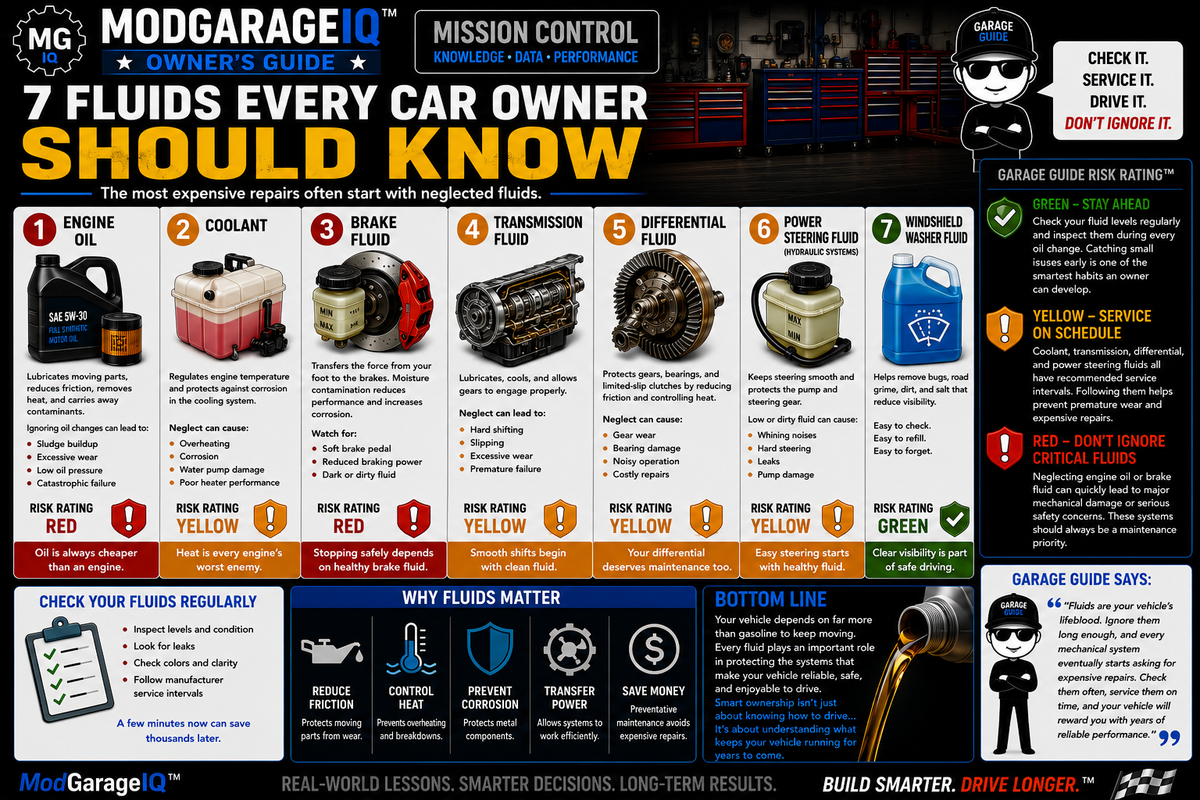
The Most Expensive Repairs Often Start With Neglected Fluids.
Most drivers know they should change their engine oil.
But your vehicle depends on much more than just one fluid to stay reliable.
Every fluid under the hood—and underneath your vehicle—has a specific job. They reduce friction, control heat, transfer power, protect expensive components, and keep your vehicle operating the way it was designed.
Ignore them long enough, and small maintenance items can quickly become major repair bills.
Understanding what each fluid does is one of the easiest ways to become a smarter vehicle owner.
Engine Oil
Engine oil is the lifeblood of your engine.
It lubricates moving parts, reduces friction, removes heat, and carries contaminants away from critical engine components.
When oil isn’t changed on time, it begins to break down, losing its ability to protect the engine. Over time, this can lead to sludge buildup, excessive wear, low oil pressure, and even catastrophic engine failure.
Changing your oil on schedule remains one of the best investments you can make.
🔴 Garage Guide Risk Rating: RED
Oil is always cheaper than an engine.
Coolant
Your cooling system does much more than prevent overheating.
Coolant regulates engine temperature while protecting the radiator, water pump, heater core, and engine passages from corrosion.
Old or contaminated coolant can cause overheating, corrosion, water pump damage, and reduced heater performance.
A healthy cooling system is essential for every vehicle—especially performance vehicles.
🟡 Garage Guide Risk Rating: YELLOW
Heat is every engine’s worst enemy.
Brake Fluid
Every time you press the brake pedal, brake fluid transfers that force to your braking system.
Over time, brake fluid naturally absorbs moisture from the air. As moisture builds, braking performance decreases while corrosion inside the brake system increases.
If your brake pedal feels soft or your brake fluid appears dark and contaminated, it’s probably time for a service.
Brakes are one system you should never ignore.
🔴 Garage Guide Risk Rating: RED
Stopping safely depends on healthy brake fluid.
Transmission Fluid
Whether your vehicle has an automatic or manual transmission, clean transmission fluid is critical for smooth operation and long-term reliability.
Transmission fluid lubricates internal components, controls heat, and allows gears to engage properly.
Neglecting transmission service can lead to harsh shifting, slipping, excessive wear, and expensive repairs that are often avoidable.
🟡 Garage Guide Risk Rating: YELLOW
Smooth shifts begin with clean fluid.
Differential Fluid
The differential quietly handles thousands of pounds of torque every time you accelerate, brake, or corner.
Its fluid protects gears, bearings, and limited-slip components by reducing friction and controlling heat.
Because many differentials don’t require frequent service, they’re often forgotten until problems develop.
Don’t overlook one of the hardest-working components on your vehicle.
🟡 Garage Guide Risk Rating: YELLOW
Your differential deserves maintenance too.
Power Steering Fluid
(Hydraulic Systems)
If your vehicle uses a hydraulic power steering system, the fluid keeps steering smooth while protecting the pump and steering gear.
Low or contaminated fluid can cause whining noises, stiff steering, leaks, and premature component wear.
Although many newer vehicles use electric power steering, hydraulic systems still require periodic inspection and maintenance.
🟡 Garage Guide Risk Rating: YELLOW
Easy steering starts with healthy fluid.
Windshield Washer Fluid
It may seem like the least important fluid on the vehicle…
Until you can’t see through the windshield.
Quality washer fluid removes bugs, road grime, dirt, salt, and other debris that can quickly reduce visibility.
It’s inexpensive, easy to check, and often overlooked.
🟢 Garage Guide Risk Rating: GREEN
Clear visibility is part of safe driving.
Check Your Fluids Regularly
You don’t need to be a professional mechanic to protect your vehicle.
Taking a few minutes to inspect fluid levels and condition during routine maintenance can help you catch leaks, identify worn components, and prevent costly repairs before they happen.
The best maintenance is preventative maintenance.
🟢 Garage Guide Risk Rating: GREEN
Small inspections today can prevent major repairs tomorrow.
Garage Guide Says
“Fluids are your vehicle’s lifeblood. Ignore them long enough, and every mechanical system eventually starts asking for expensive repairs. Check them often, service them on time, and your vehicle will reward you with years of reliable performance.”
Garage Guide Risk Rating™
🟢 GREEN — Stay Ahead
Check your fluid levels regularly and inspect them during every oil change. Catching small issues early is one of the smartest habits an owner can develop.
🟡 YELLOW — Service On Schedule
Coolant, transmission, differential, and power steering fluids all have recommended service intervals. Following them helps prevent premature wear and expensive repairs.
🔴 RED — Don’t Ignore Critical Fluids
Neglecting engine oil or brake fluid can quickly lead to major mechanical damage or serious safety concerns. These systems should always be a maintenance priority.
Bottom Line
Your vehicle depends on far more than gasoline to keep moving.
Every fluid plays an important role in protecting the systems that make your vehicle reliable, safe, and enjoyable to drive.
Learning what each fluid does—and servicing it at the proper interval—is one of the smartest investments any owner can make.
Because smart ownership isn’t just about knowing how to drive…
It’s about understanding what keeps your vehicle running for years to come.
🏁 Build Smarter. Drive Longer.