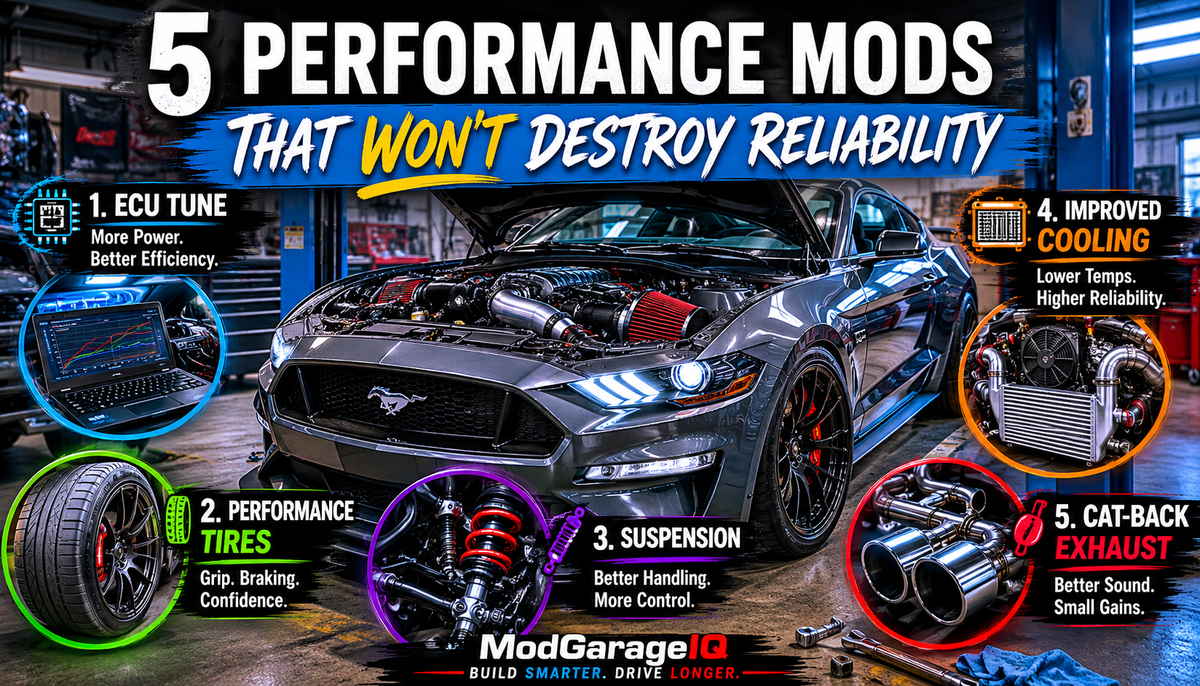
5 Performance Mods That Won’t Destroy Reliability
In the world of automotive modification, it’s easy to get caught up in horsepower numbers, dyno charts, and social media bragging rights. Unfortunately, many enthusiasts learn the hard way that chasing performance without considering reliability often leads to expensive repairs, downtime, and frustration.
The good news is that not all performance upgrades come at the expense of longevity. In fact, some modifications can improve the driving experience while maintaining—or even enhancing—vehicle reliability.
Here are five performance modifications that can deliver meaningful results without turning your daily driver into a garage ornament.
1. Quality ECU Tuning
Modern vehicles leave the factory with conservative engine calibrations designed to accommodate varying fuel qualities, climates, and driving habits. A professionally developed ECU tune can unlock hidden performance without pushing the engine beyond its limits.
The key is choosing a reputable tuner who prioritizes safe air-fuel ratios, conservative ignition timing, and proper thermal management.
Benefits:
- Increased horsepower and torque
- Improved throttle response
- Better drivability
Avoid:
- Aggressive “max power” tunes
- Unknown mail-order calibrations
- Excessive boost increases on stock components
A properly executed tune can be one of the most effective and reliable performance upgrades available.
2. High-Performance Tires
Few modifications deliver more real-world performance than a quality set of tires.
While enthusiasts often focus on engine upgrades, tires directly influence acceleration, braking, cornering, and overall safety. Even modest vehicles can feel dramatically more responsive with improved grip.
Benefits:
- Shorter braking distances
- Improved cornering capability
- Enhanced driver confidence
- Better acceleration traction
Unlike many performance modifications, quality tires carry virtually no reliability penalty.
3. Suspension Upgrades
Horsepower is only part of the performance equation. The ability to effectively transfer power and maintain control through corners is equally important.
Upgrading dampers, springs, sway bars, or coilovers can significantly improve vehicle handling while maintaining daily usability when quality components are selected.
Benefits:
- Reduced body roll
- Improved stability
- Sharper steering response
- Better overall driving dynamics
Avoid excessively stiff setups designed primarily for appearance rather than performance.
4. Improved Cooling Systems
Heat is the enemy of both performance and reliability.
As power levels increase, cooling demands rise as well. Upgrading cooling components can improve engine consistency while reducing stress on critical systems.
Examples include:
- Larger radiators
- Upgraded intercoolers
- Oil coolers
- Transmission coolers
Benefits:
- Lower operating temperatures
- Increased reliability under load
- Improved performance consistency
Unlike many modifications, cooling upgrades often become more valuable