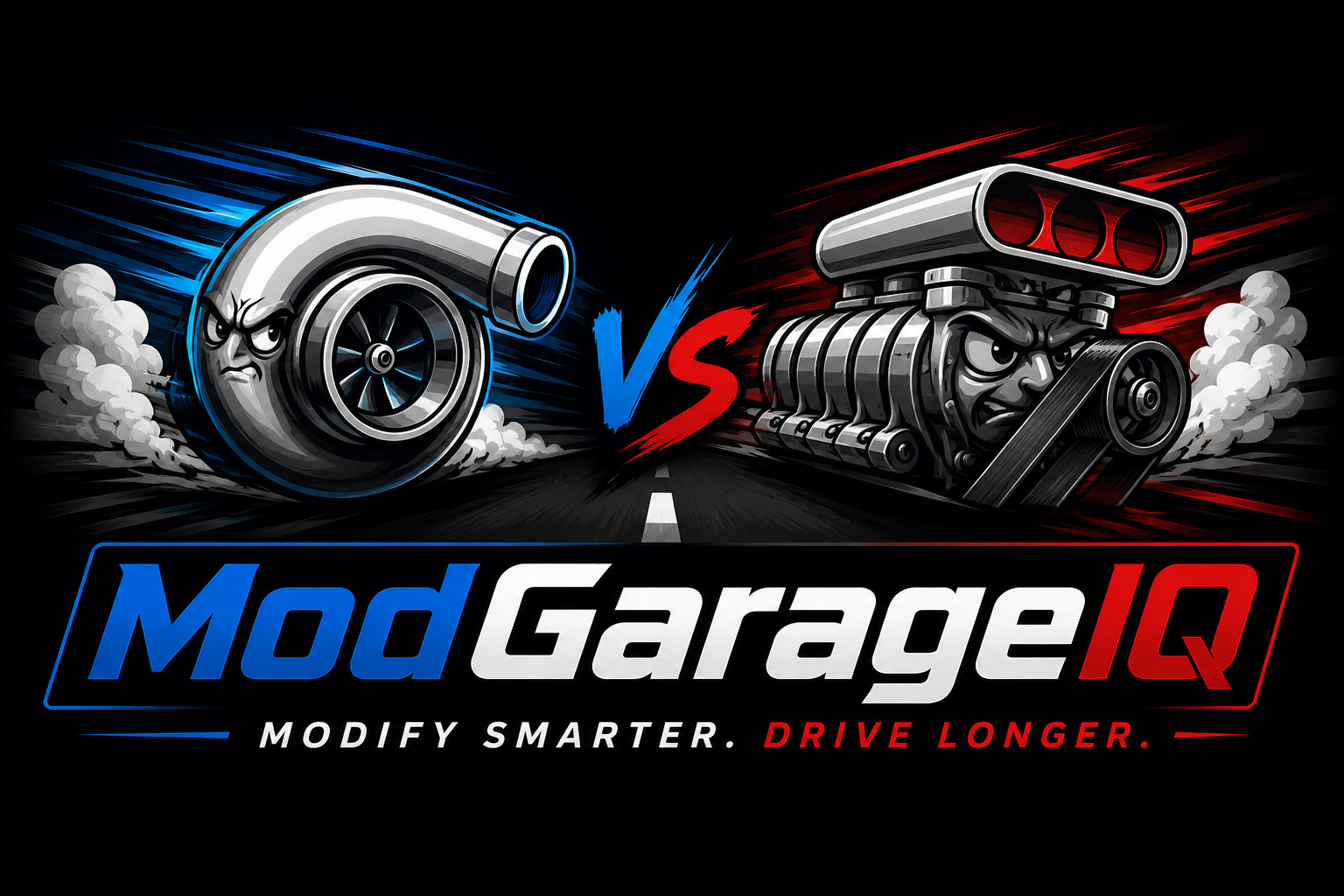
Turbocharger vs. Supercharger: Which Is Right for Your Vehicle?
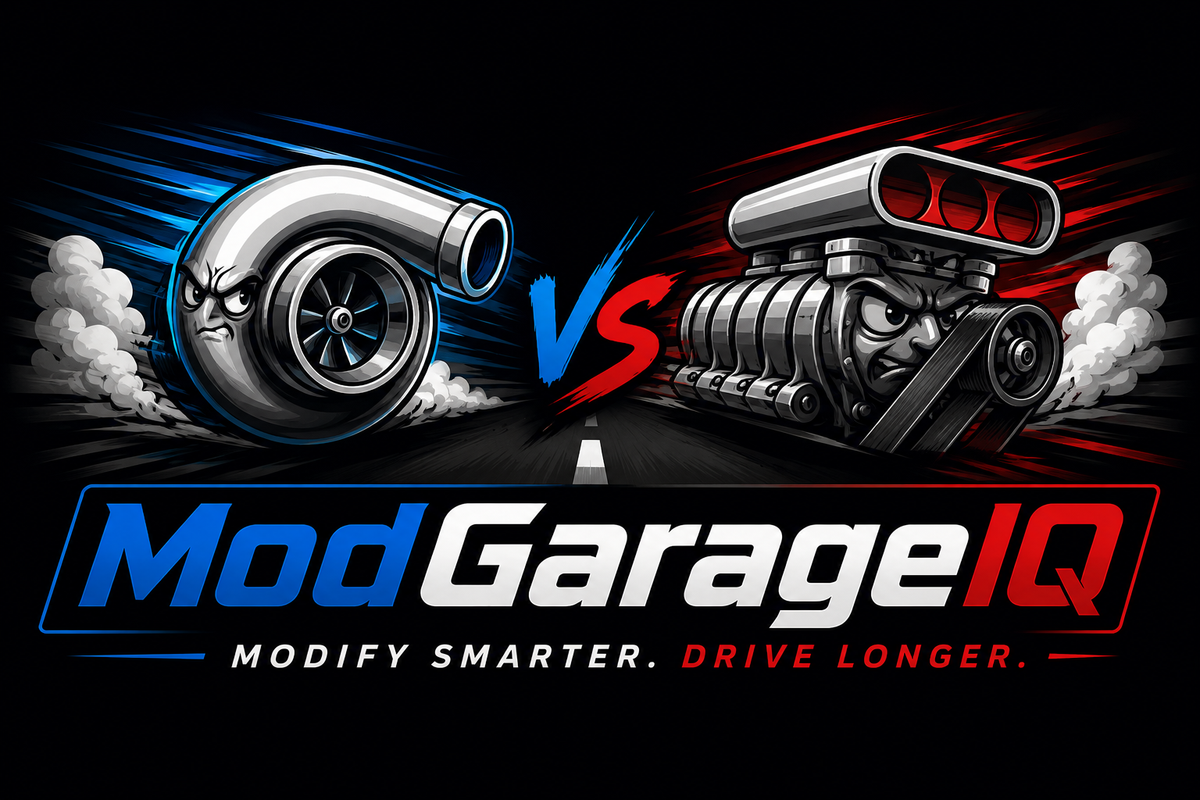
Performance, reliability, cost, and long-term ownership compared.
Few automotive debates have lasted longer than turbochargers versus superchargers.
Both force more air into an engine. Both increase horsepower. Both can transform the driving experience.
Yet they deliver power in very different ways, and choosing the wrong system can leave owners disappointed, frustrated, and significantly over budget.
The answer isn't which system is better.
The answer is which system is better for your goals.
Understanding Forced Induction
Naturally aspirated engines rely solely on atmospheric pressure to fill the cylinders with air.
Forced induction systems compress incoming air, allowing the engine to burn more fuel and create more power.
The two most common methods are:
- Turbochargers
- Superchargers
While they achieve similar results, the way they create boost is entirely different.
How a Turbocharger Works
A turbocharger uses exhaust gases to spin a turbine.
That turbine powers a compressor wheel that forces additional air into the engine.
Because the turbo is powered by exhaust energy that would otherwise be wasted, it can produce significant horsepower gains with impressive efficiency.
Turbocharger Advantages
- Excellent horsepower potential
- Strong fuel efficiency when driven conservatively
- Efficient use of exhaust energy
- Large aftermarket support
- High tuning flexibility
Turbocharger Disadvantages
- Turbo lag
- Increased engine bay heat
- More complex plumbing
- Greater tuning sensitivity
- Potential reliability concerns at high boost levels
How a Supercharger Works
A supercharger is mechanically driven by the engine itself, typically through a belt connected to the crankshaft.
Because boost is directly tied to engine speed, power delivery is immediate.
There is no waiting for exhaust pressure to build.
Supercharger Advantages
- Instant throttle response
- Predictable power delivery
- Easier drivability
- Excellent low-end torque
- Simpler tuning in many applications
Supercharger Disadvantages
- Reduced fuel economy
- Constant parasitic power loss
- Lower efficiency compared to many turbo systems
- Increased stress on accessory drives
- Typically higher initial installation cost
The Driving Experience
This is where the differences become obvious.
Turbocharged Vehicles
Turbocharged vehicles often feel calm at lower RPMs before delivering a surge of power once boost arrives.
Modern turbo systems have reduced lag significantly, but the sensation still exists.
Many enthusiasts enjoy the dramatic boost hit and high-rpm power.
Supercharged Vehicles
Supercharged vehicles feel powerful immediately.
Press the throttle and the engine responds instantly.
The power curve feels smooth and linear, making supercharged vehicles predictable and confidence-inspiring.
For daily driving, many owners prefer the responsiveness of a supercharger.
For maximum horsepower potential, many choose turbochargers.
Reliability Comparison
At ModGarageIQ, reliability matters as much as performance.
Neither system is automatically more reliable.
Reliability depends on:
- Installation quality
- Tuning quality
- Cooling capacity
- Maintenance practices
- Power goals
That said, each system introduces different challenges.
Turbo Reliability Concerns
- High exhaust temperatures
- Oil supply issues
- Additional cooling requirements
- Increased complexity
Supercharger Reliability Concerns
- Belt wear
- Increased engine load
- Bearing maintenance
- Heat generation under sustained load
Both systems can be reliable when installed properly and operated within reasonable limits.
The greatest reliability risk is usually aggressive tuning, not the hardware itself.
Cost Comparison
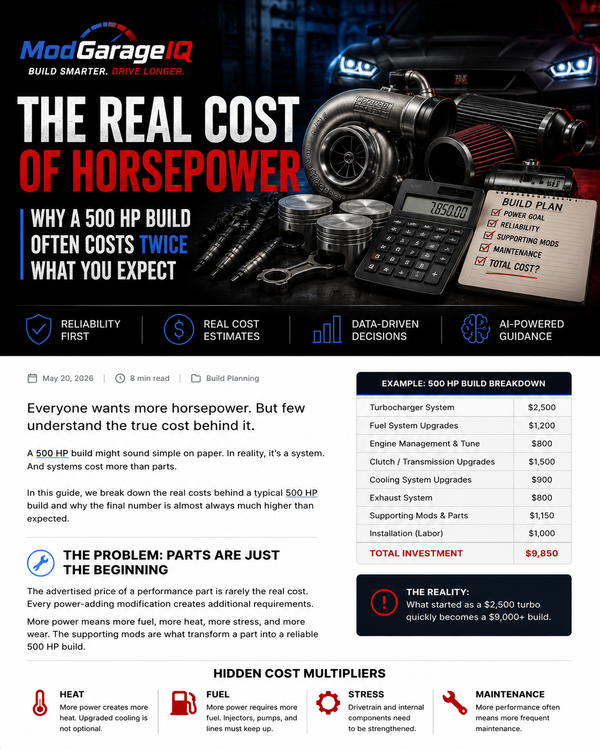
Many enthusiasts underestimate total ownership costs.
Turbo Build
Typical costs may include:
- Turbocharger
- Exhaust components
- Intercooler
- Fuel system upgrades
- Tuning
- Additional cooling
Supercharger Build
Typical costs may include:
- Supercharger kit
- Fuel system upgrades
- Tuning
- Belt system maintenance
- Cooling upgrades
While pricing varies by platform, turbo systems often provide greater horsepower per dollar.
Supercharger systems often provide easier drivability and a simpler ownership experience.
Which One Should You Choose?
Choose a Turbocharger If:
- Maximum horsepower is the goal
- You enjoy tuning and customization
- Fuel efficiency matters
- You want the greatest growth potential
Choose a Supercharger If:
- Instant throttle response matters most
- You prefer predictable power delivery
- You want a more OEM-like driving experience
- Low-end torque is important
The ModGarageIQ Verdict
The best choice depends entirely on your goals.
A daily-driven street vehicle may benefit from the smooth responsiveness of a supercharger.
A performance-focused project targeting significant horsepower gains may be better served by a turbocharger.
Neither system is universally superior.
The smartest build is the one that aligns with your budget, reliability expectations, maintenance commitment, and performance goals.
Before purchasing either system, ask yourself:
What do I actually want this vehicle to do?
Answer that question honestly, and the right choice often becomes obvious.
Build smarter. Drive longer.